
From Clean Catalogue to Location-Led Imagery
Catalogue Photographer in Singapore
I photograph collections through clean, repeatable catalogue images or more contemporary location-based sets, adapting the lighting, direction and surroundings without losing sight of how clearly each item needs to be presented.
Catalogue Photography Sessions in Singapore
Catalogue photography can provide clean, repeatable images for straightforward product comparison or place a collection within a more contemporary outdoor or location-based setting. The right approach depends on what customers need to see and where the photographs will appear.
E-commerce listings generally benefit from consistent viewpoints and visible product details, while lookbooks and campaigns may use movement, models and environmental context. A project can combine both: reference images for individual items and stronger presentation photographs for promotion.
I plan the lighting, location, styling and shot list around the item count, required angles, output formats and number of looks. This keeps a creative setting in service of the product rather than allowing it to become the main subject.
What We Can Create
- E-commerce Images:
Clear, consistent views that help customers examine individual products.
- On-Model Catalogue Photography:
Clothing, accessories and products shown in use, with attention to fit and important details.
- Lookbooks & Collections:
A related sequence of styled photographs for presenting a range or season.
- Lifestyle & Campaign Images:
Products photographed in environments that support their use and brand direction.
Who Catalogue Photography Is For
- E-commerce stores and retail businesses
- Fashion labels, designers and boutiques
- Product brands and service providers
- Creative teams launching a collection or campaign
Your Goals for the Photoshoot
- Show products clearly:
Record the shape, colour, fit and details customers need to understand.
- Keep a collection consistent:
Use repeatable framing, lighting and direction across related items.
- Demonstrate real use:
Photograph clothing or products on people and in relevant situations.
- Build a stronger visual identity:
Use styling and locations to distinguish the collection without obscuring it.
- Serve several platforms:
Plan suitable variations for listings, catalogues, websites, lookbooks and social media.
My guide to photoshoot goals can help you prioritise clear reference images, styled presentation or a combination of both.
Planning Your Catalogue Photoshoot
Please provide the item and look count, required angles, important details, models, styling, platforms and output dimensions. Products should be organised and ready in the intended shooting order so the session can maintain consistency efficiently. The photoshoot workflow explains the wider process from preparation to final delivery.
Where We Can Shoot
- Studio:
My private portrait studio or a suitable rental studio can provide plain backgrounds, repeatable product views and consistent catalogue lighting.
- Indoors:
A home, hotel, café, restaurant, co-working space, boutique venue, community centre or another suitable interior can support lifestyle products and a particular brand setting.
- Outdoors:
Urban streets and architecture, parks and gardens, rooftop venues, cultural landmarks, beaches, courtyards, markets and recreational spaces can give fashion and product collections a more contemporary context.
My on-location photography can also take place at a warehouse, production floor, retail space, shopping mall, private venue or another indoor or outdoor environment relevant to the products. Browse my guide to photoshoot places in Singapore for more possibilities.
Lighting Options for Your Photoshoot
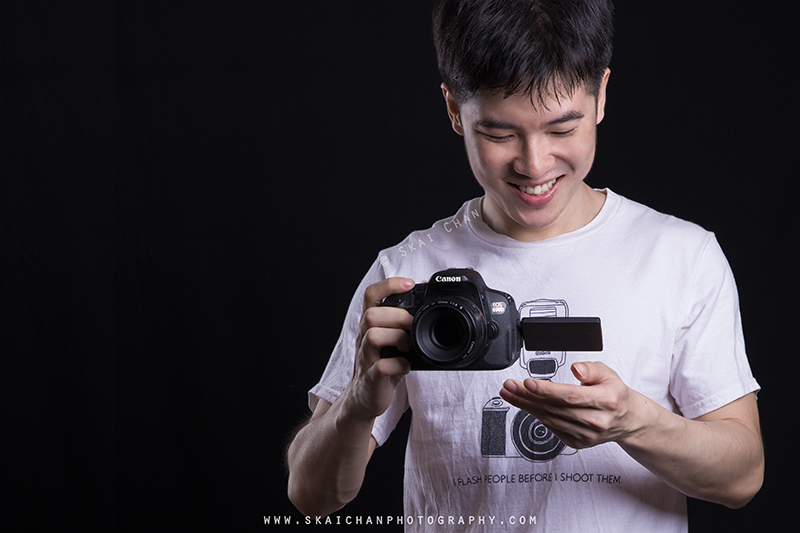
The lighting approach is determined by the package you choose. The more basic option uses natural or available light, while other packages may include off-camera flash.

- Natural or available light:
Natural-light packages use suitable daylight or existing light at the location and usually allow us to move between positions with less setup time. If the conditions require additional support, I may use an on-camera speedlite, normally bounced from a suitable wall or ceiling.
- Off-camera flash:
You can choose a package that includes off-camera flash or arrange it as a paid add-on where offered. The standard setup uses one light; additional lights cost extra.
- Advance arrangement:
Off-camera flash must be arranged before the shoot so that I can plan the equipment, timing and location requirements. If conditions prevent the planned setup, I may use an on-camera speedlite instead, bouncing it from a suitable wall or ceiling where possible or using a larger flash modifier when there is no suitable surface.
For a practical comparison, read my guide to flash and natural-light photography.
Catalogue Gallery
A catalogue photoshoot can be done in various locations, such as photo studios, outdoor and indoor (house, hotel etc).
A business owner should consider both the effect/ feel of the photographs and budget when deciding on the location.
Photo Studio Catalogue


The common and traditional catalogue photoshoots are done in a photography studio with plain backdrops. Having a plain backdrop can avoid distractions since the focus should be on the apparatus.
On the other hand, studio photography is easier as compared to outdoor photography in many aspects. It's more comfortable to do a photoshoot in a clean and dry place with minimum insects. Moreover, the photoshoot can also be scheduled at any time of the day since it's not affected by the sunlight. Eventually, the photographer doesn't have to battle the everchanging sunlight and weather.
Since it's easier and faster for the model to change into different outfits, it's suitable for a large fashion catalogue that has many outfits.
Challenges
Since a studio photoshoot likely requires more strobes, especially for a solid white backdrop, the effort to set up the studio strobes and light modifiers may be more tedious.
Outdoor Catalogue


Outdoor catalogue photoshoots are modern and trendy. It gives viewers better visualisation of wearing or holding the apparatus in a real-life scenario.
Challenges
Creating good photographs outdoors requires the expertise and experience of the photographer. The quality of photographs is affected greatly by the weather. It's more difficult for the model to get changed and thus it may not be advisable for a large number of outfits.
Indoor Catalogue


An indoor catalogue photoshoot can be done at a residential or commercial place. Since it's easier to decorate the place as compared to an outdoor catalogue photoshoot, the result can turn out to look even more stylish than an outdoor one. At the same time, it also enjoys many benefits of doing a studio photoshoot, especially the comfort level.
Challenges
It may not be easy to source for a nice indoor place and extra costs may incur. In some situations where professional lighting (high-end photography) has to be set up in order to create a better presentation, the furniture may pose difficulties in the placement of the lighting equipment.
Product Catalogue


A product photoshoot doesn't always have to be presented in the usual lifeless way. A model can inject fun into the photoshoot while the expression can speak a lot about the product, which can influence the opinions of the viewers.
This tactic has been employed by TV commercial advertisements and also adopted by brands that use posters for advertisements.


Be it apparatus, accessories or even food, the pictures can be done creatively.
Why Choose Skai for Catalogue Photography
Catalogue photography requires consistency and a clear representation of the clothing or product, but it does not always have to resemble a conventional plain studio catalogue. I can create dependable series in controlled conditions or develop a more modern on-location treatment when the brand and intended use support it.
- Consistency Across an Entire Collection:
I control framing, camera position, light and direction so that products can be compared without distracting changes between images. The required views and variations are agreed before production begins.
- Attention to the Product, Fit and Important Details:
I look beyond the model’s face to how clothing sits, whether key features are visible and whether accessories or styling interfere with the item. The product remains the reason for the photograph.
- Studio Accuracy or Modern On-Location Presentation:
I can work with a controlled studio-style setup or create catalogue and lookbook images outdoors and in suitable interiors. On-location work can provide a more contemporary context while still maintaining a coherent collection.
- Efficient Direction for Models and Production Teams:
I give clear instructions through my no-touch posing approach and coordinate with the client or stylist on garment changes and priorities. This helps the session move systematically through a larger shot list.
- Lighting Chosen for Material, Colour and Brand:
I select available or arranged lighting according to the package, surface and intended finish. The goal is to show texture and shape attractively without allowing a dramatic effect to misrepresent the product.
For an accurate quotation, share the product count, required views, styling plan and intended channels. You can also learn more about why clients choose Skai Chan Photography.
Reviews
Clients' Testimonials
Pricing & Packages
Essential
SGD 600
Duration1.5 hr
Final images15 photos (basic edit)
LightingNatural light
Wardrobe3 outfits
Optional Add-ons
Extra time
$100per additional 30-minute block
Extra photo
$30each · basic edit | $80each · advanced edit
$100per 30 minutes of booked coverage
Classic
SGD 800
Duration1.5 hr
Final images15 photos (basic edit)
LightingOff-Camera Flash
Wardrobe3 outfits
Optional Add-ons
Extra time
$100per additional 30-minute block
Extra photo
$30each · basic edit | $80each · advanced edit
$100per 30 minutes of booked coverage
Signature
SGD 2000
Duration1.5 hr
Final images15 photos (adv edit)
LightingOff-Camera Flash
Wardrobe3 outfits
Optional Add-ons
Extra time
$100per additional 30-minute block
Extra photo
$30each · basic edit | $80each · advanced edit
$100per 30 minutes of booked coverage
When choosing a package for catalogue photography, the most suitable option depends on the session duration, number of people, number of final photographs, location, lighting requirements, level of editing and whether the photographs are for personal or commercial use.
Studio or venue hire, location permits, travel, special props or styling, additional lighting or manpower, advanced retouching, urgent delivery and other optional services may involve additional charges where relevant. I will discuss any relevant requirements and costs with you before the session is confirmed.
Skai the Catalogue Photographer
My main focus for photography is on portraiture and fashion photography is one of the most common portrait genres. This is how I have built my foundation for creating catalogue pictures.
Outdoor Fashion Catalogue
My forte is on outdoor photoshoots because the ever-changing weather makes it more challenging as compared to both photo studio and indoor photoshoots, and this is where I outshine others. A modern fashion catalogue photoshoot can be done outdoors and this is the same reason why many people have chosen outdoors for their corporate photoshoots.
High-End Catalogue Photography
Photography is more than just clicking the shutter button on the DSLR. As lighting is one of the most crucial parts of photography, I take it to a higher level by including professional lighting. This is known as high-end photography. It makes the photographs look more professional.
My style in portrait photography is towards lifestyle, which allows the models to move more freely; therefore, they look more relaxed and not as posey. My main clients are non-professional models and my experience helps me to work well with anyone.
Studio Catalogue Photography
For studio photoshoots, I take it to another level by setting up a makeshift studio at any location. Of course, I will be better geared at my tiny home studio.
Get everything right during the photoshoot
While it's an income opportunity for photographers to get more skin retouching work (advanced editing), it's actually a tedious process, which not every passionate photographer would enjoy doing. I prefer spending my time doing more photography work to doing post-production work and I believe in getting everything right during the actual photoshoot.
Want to know what shaped the way I work today? My photography journey has taught me far more than cameras and lighting.
Discover My Photography Journey →
Understanding Catalogue Photography
What Is Catalogue Photography?
Catalogue photography creates a consistent collection of photographs used to present products clearly across catalogues, websites, e-commerce stores and other sales or marketing materials. Depending on the products, they may be photographed individually or shown on models, with the emphasis usually placed on helping customers see and compare the items easily.
For fashion catalogue photography, this may involve photographing multiple outfits or products using consistent lighting, backgrounds, framing and poses. The objective is different from editorial photography, where there is usually more freedom to create dramatic or story-driven images. Catalogue photographs generally need to work together as a coherent collection rather than having every image compete for attention individually.
Catalogue photography can also overlap with lookbook photography, but I don't consider them exactly the same. A catalogue usually prioritises consistency and clear presentation of the products, while a lookbook may use more varied poses, locations, compositions and styling to communicate how a collection can look or feel when worn. Depending on the client's requirements, a photoshoot can also combine elements of both approaches.
One of the main challenges is maintaining consistency when many products have to be photographed. Changes in lighting, camera position, framing or posing can become obvious when the photographs are displayed next to one another. At the same time, different clothing, products and models may require adjustments, so consistency doesn't necessarily mean using exactly the same setup without considering what is being photographed.
For me, good catalogue photography begins with understanding how the final photographs will be used and what needs to remain consistent throughout the collection. This helps me plan the lighting, background, framing, poses and workflow so that we can work efficiently while still presenting each product properly. For larger collections, planning the shooting order and requirements beforehand can also reduce unnecessary changes during the photoshoot.
Related genres: Editorial Photography, Product Photography, Fashion Photography, Men's Fashion Photography, Women's Fashion Photography and Themed Photography.
Why Catalogue Photography Matters
Catalogue photography helps present products clearly, consistently, and professionally. High-quality images make it easier for customers to understand what they are purchasing.
Professional catalogue photography can:
- improve product presentation
- create consistency across product ranges
- support e-commerce and marketing efforts
- build trust with potential customers
- increase perceived product value
Clear and professional product images help businesses present their offerings confidently and effectively.
Choice of Catalogue Model
The selection of the model for a catalogue/ blogshop photoshoot is crucial, especially for catalogues with a large collection or/ and clients with lower budgets.
The main requirement of the model is that his/ her complexion must be generally good, or at least to a standard that professional makeup can conceal any skin issue. The body type must fit the intended apparatus.
The looks of the model will greatly affect the branding of the products. This explains why when you look at posters of many fashion outlets, not all models have excellent facial features, but somehow, you don't see major flaws in their skin, especially for female models.
One way to fix skin issues is through photo-editing. However, professional skin retouching (advanced editing) requires a huge amount of time and thus is expensive. Therefore it's not advisable for catalogue photoshoots to include such dedicated work in order to keep within the budget and yet able to produce good quality pictures.
Portrait Photography Guides & Resources
Explore these guides to help you plan your portrait photoshoot, understand different photography approaches and know what to expect throughout the process.
Planning Your Photoshoot
- What Do You Want From Your Photoshoot?
- Portrait Shoot Preparation Guide
- How to Choose the Right Photoshoot Duration
- How to Plan Your Wardrobe With Your Photographer
- All Photoshoot Places in Singapore
- Best Locations for Portrait Photography in Singapore
- How to Slim Down for a Photoshoot
- Should Your Partner or Family Tag Along to a Photoshoot?
- Wet weather photoshoot in Singapore
Understanding Photography
- Flash vs Natural Light Photography
- Lifestyle vs Fashion Photography
- Outdoor, studio, indoor photography comparison
Photoshoot Process
FAQ
Brief, Models & Styling
Location, Consistency & Delivery
For general questions about booking, payment, preparation, editing, delivery and privacy, visit the main photography FAQ.
Ready to Book Your Catalogue Session?
- View FAQs
- View Booking Process
Explore the Possibilities
Find Your Photography Session
Browse every portrait, commercial, event and specialist photography service available.
 Scan QR to visit this website
0%