Choosing a Boudoir Photoshoot Location in Singapore
Hotels, homes, studios or outdoors? Explore their advantages, limitations and what I've learnt from photographing boudoir sessions in different settings.
Introduction
Where should you have your boudoir photoshoot in Singapore? Hotels are a popular choice, but private homes, photography studios and even outdoor locations can work beautifully, depending on the style of photographs you want.
Having photographed boudoir sessions in different settings, I've learnt that an attractive location isn't necessarily a practical one. A luxurious hotel room may be too cramped for certain compositions, while a modest bedroom can offer plenty of possibilities when the space is suitable. Besides appearance, I consider privacy, lighting, furniture, working space and how comfortably we can conduct the session.
In this guide, I'll share what I've learnt from photographing intimate portraits in different settings, including some of the less glamorous problems that clients may not think about when choosing a venue. If you're still planning the rest of your session, my boudoir photoshoot preparation guide covers outfits, grooming, posing and what to expect.
What Makes a Good Boudoir Photoshoot Location?
There isn't a single location that suits every boudoir concept. A softly furnished bedroom may be ideal for romantic photographs, while a studio with a plain backdrop could be better for clean, editorial-style portraits. Even within the same venue, the available furniture, colours and layout can lead to very different results.
When I assess a location, I look beyond its decoration. I consider how much usable space there is, whether the furniture supports the intended poses, how the background will appear from different camera angles and whether I can position my lighting equipment effectively. Windows, mirrors and reflective surfaces also matter because they can affect both the lighting and what appears in the frame.
Then there are the practical questions: Will anyone interrupt us? Is there somewhere suitable to change? Are photography and lighting equipment permitted? Does the venue allow enough time for preparation and the shoot itself? A location that looks wonderful but creates constant interruptions may not be a good choice after all.
Hotel Boudoir Photography
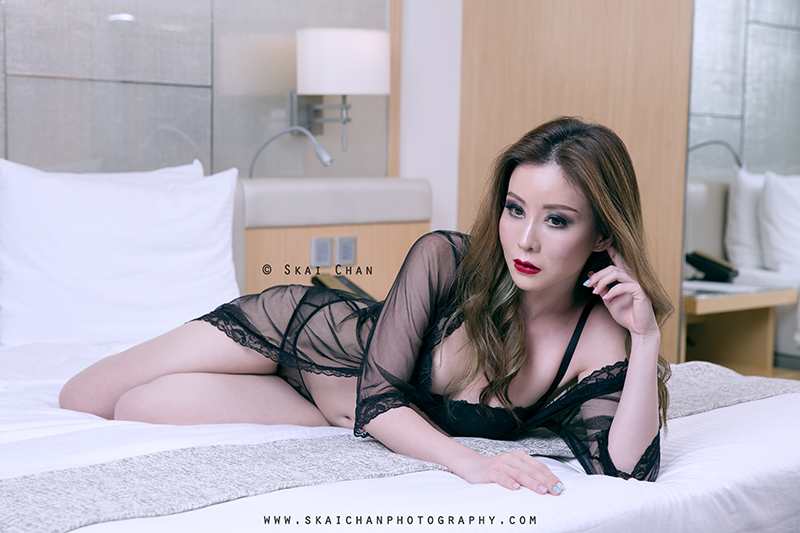
▲Boudoir photography in a hotel room
Hotels are one of my preferred options for boudoir photography when the client wants an intimate, comfortable-looking environment without using their own home. An attractive room can provide a ready-made setting, with a bed, curtains, furnishings and interior details that contribute to the mood of the photographs. This is particularly useful for romantic or lifestyle-oriented boudoir portraits.
A hotel can also offer more privacy than a shared home, provided the room is reserved for the session and interruptions are minimised. However, I wouldn't choose a hotel simply because it looks luxurious. The room must suit the photography concept, and its layout is often more important than the hotel's star rating.
Choosing the Right Hotel Room
My preference is generally for a boutique hotel with interesting interiors or a hotel room with sufficient space to move around. A larger room gives me more flexibility with camera angles, furniture placement and lighting, although the actual layout matters more than the floor area stated in the listing. A spacious room filled with bulky furniture can still be difficult to work in.
Pay attention to the bed, headboard, sofa, walls and curtains, as these may become prominent parts of the photographs. It's also worth checking the bathroom if you're interested in bathtub photography. Hotel listing photographs can be misleading because they are often taken with wide-angle lenses and carefully chosen camera positions, so ask for additional photographs or a room layout if you're uncertain.
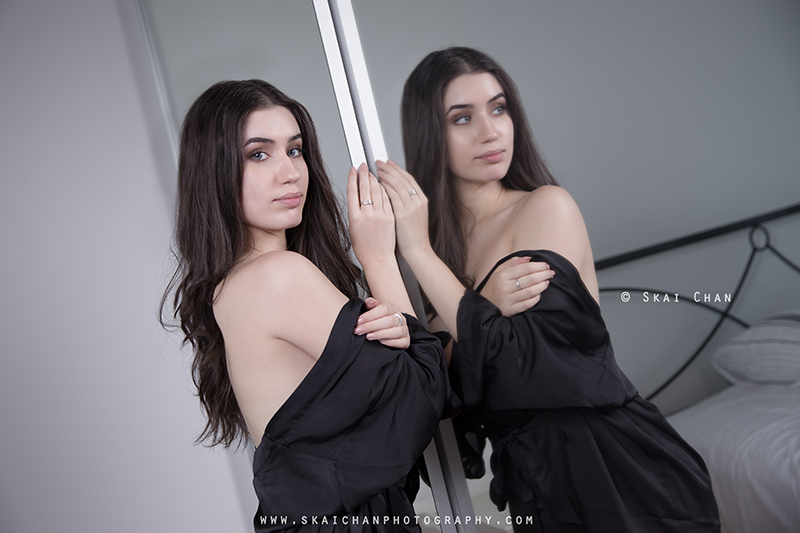
Mirrors, glass partitions and other reflective surfaces deserve special attention. They may look attractive as part of the interior design, but they can also reflect lighting equipment, the photographer or parts of the room that you would rather keep out of the photograph. This doesn't automatically make the room unsuitable; it simply means we need to plan around those surfaces.
A Spacious Hotel Room With Poor Lighting
▲Boudoir photography in a hotel room using off-camera flash
I once photographed a client who had already booked a boutique hotel before approaching me for a boudoir photoshoot. The interior design was rather minimalist, so the backgrounds were quite plain and didn't offer much visual interest on their own. However, the room was long and spacious, with several interesting features, including a small open-air area, a generous bathing space and a bathtub. These gave us more opportunities to experiment with different compositions and create a greater variety of photographs.
As I had anticipated, the room was rather gloomy. Fortunately, the client had booked my package with professional off-camera flash, so I wasn't restricted to the hotel's existing lighting. I could position and adjust my lights to create the mood I wanted while making use of the room's different features.
Available-light photography relies on existing light, such as daylight from windows and the room's lamps. It can produce beautiful results, but the lighting conditions may limit what we can achieve. With off-camera flash, I have greater control over the direction, softness and intensity of the light, although the room's layout and reflective surfaces still affect where I can position my equipment. I've shared photographic examples in my comparison of photography with and without flash.
This experience illustrates why I consider both the layout and lighting when assessing a hotel room. A beautifully decorated room may provide attractive backgrounds but very little working space, while a simpler room with a practical layout can offer more creative possibilities. Of course, having sufficient space for lighting equipment and knowing how to use it effectively also make a difference.
If you're planning to book a hotel specifically for a boudoir photoshoot, I encourage you to share your shortlisted rooms with me before making a reservation. Hotel photographs can give us an idea of the interior design, but they don't always reveal the amount of usable space or the actual lighting conditions. I may be able to identify potential limitations or suggest what to look out for before you commit to the booking.
Hotel Costs and Staycations
The obvious disadvantage of hotel boudoir photography is the additional cost. A room that fits the concept and provides enough space may cost more than a basic hotel room. Since you're already investing in professional photography, I wouldn't recommend choosing the cheapest room without first considering whether it can support the photographs you want. Saving on the venue isn't much of a saving if the setting prevents us from creating your intended compositions.
That said, the hotel doesn't have to be booked solely for the photoshoot. Some clients have arranged their boudoir sessions during staycations or special occasions, allowing them to enjoy the room afterwards. I think this is a practical way to make better use of the booking, provided the hotel's rules allow the photography arrangements and we have sufficient time before checkout or other commitments.
Boudoir Photography at Home
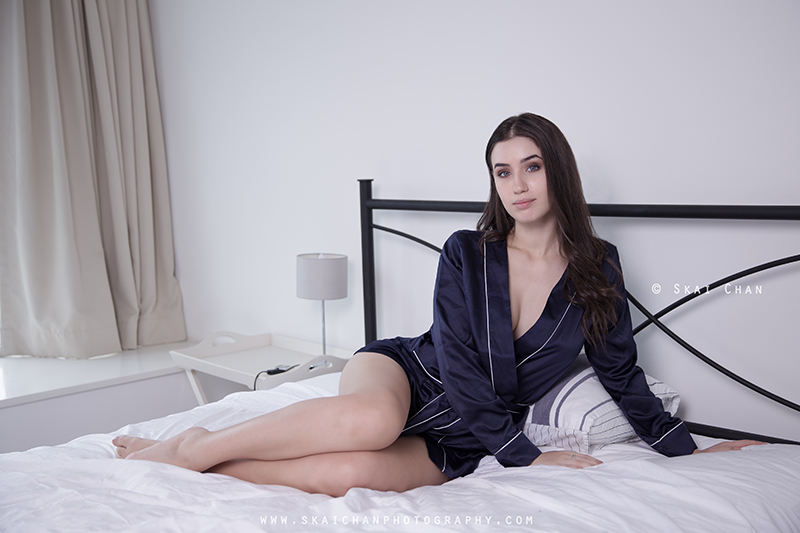
▲Bedroom boudoir photography at home
If your home has a suitable bedroom or living room, you may not need to rent another venue at all. Besides saving money, photographing at home means you're already familiar with the surroundings, which can help you feel more relaxed. You also have easy access to your wardrobe, accessories and personal belongings, so we may discover useful outfits or props that weren't included in our initial discussion.
A home doesn't need to resemble a luxury hotel to be suitable for boudoir photography. What matters is whether the space can support the style you want and whether we can work comfortably without unnecessary distractions. In my experience, privacy and the room's condition are two of the biggest considerations.
Privacy and Interruptions at Home
Privacy can become complicated when you live with family members, housemates or other occupants. I once photographed a client in her bedroom while her parents were at home, and I had to be particularly careful with how I gave posing instructions because they might overhear and misunderstand the situation. The photography itself wasn't the problem; the lack of complete privacy made communication less straightforward.
Another session took place in a shared home where we were using the living room because a friend was occupying the client's bedroom. One housemate was unwell and stayed home, while another unexpectedly returned from overseas. With people moving around and the situation becoming increasingly awkward, we lost valuable shooting time. It was a useful reminder that having permission to use a space doesn't necessarily mean having uninterrupted use of it.
If you're considering a home session, I recommend arranging a period when other occupants won't need to enter the shooting area. Let everyone concerned know what space will be used, and make sure you have somewhere private to change. These arrangements are especially important if you intend to wear lingerie or attempt more intimate poses.
How Your Bedroom Affects the Photographs
I usually enjoy creating a wide variety of photographs during a session, from full-body portraits to close-ups, using different poses, backgrounds and camera angles. A room doesn't need expensive furniture or elaborate decoration, but its appearance and layout affect how much of that variety we can explore. I've photographed bedrooms at both extremes: one with very little furniture and another where belongings left us with few clear backgrounds.
▲Boudoir photography in a simply furnished bedroom
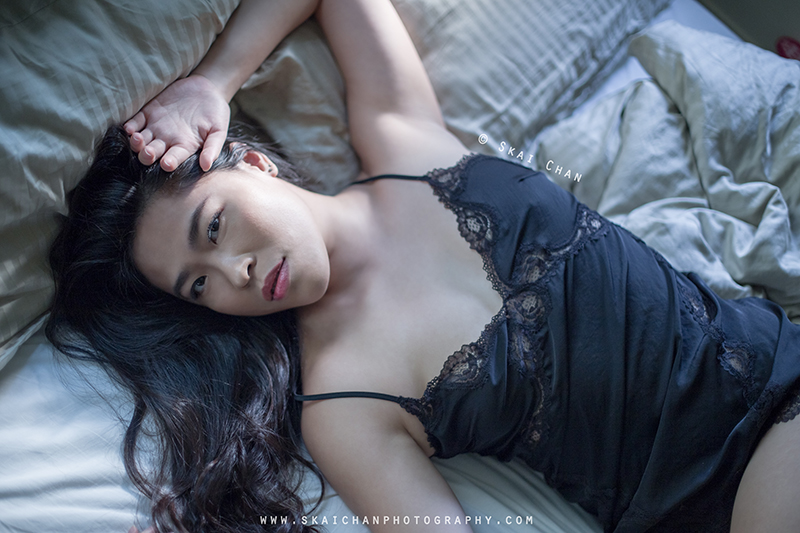
In the first case, I photographed a lady who visited Singapore occasionally and stayed in her family's apartment. She had her own bedroom, but it was rather sparsely furnished, possibly because she didn't spend much time there. There weren't as many interesting backgrounds or decorative elements as I had anticipated, so I worked with whatever furniture and space we had, adjusting my compositions to make the best use of the room.
▲Close-up boudoir photography in a bedroom
On another occasion, I photographed a lady who had recently moved into a rented bedroom and hadn't finished unpacking. With clothes and other belongings still occupying parts of the floor and desk, there were fewer suitable backgrounds for wider compositions. Rather than spend too much of our session trying to work around the room, I concentrated on close-up portraits on the bed.
She was very cooperative and natural in front of the camera, which helped us create many beautiful photographs. There was certainly nothing wrong with concentrating on close-ups, and the results were lovely. However, I usually enjoy exploring a greater variety of compositions, including full-body portraits, different backgrounds and camera angles. The room simply gave me fewer opportunities to do so.
I suppose I'm a little greedy when it comes to photographic variety! That's my personal preference, though, not a measure of whether a photoshoot is successful. These experiences have reminded me that a room's condition affects the creative possibilities, not the client's ability to look good in photographs.
Before arranging a home boudoir photoshoot, I encourage clients to send me photographs of the intended shooting space so I can assess the backgrounds, furniture, lighting and available working area. Sometimes, a little rearrangement or tidying up is enough to make a noticeable difference.
If you have a suitable sofa, bed or window area, we may be able to use several parts of the home for different looks. However, changing setups takes time, so it's better to identify the most promising areas beforehand rather than assume we'll have time to photograph every corner of the house.
Studio Boudoir Photography
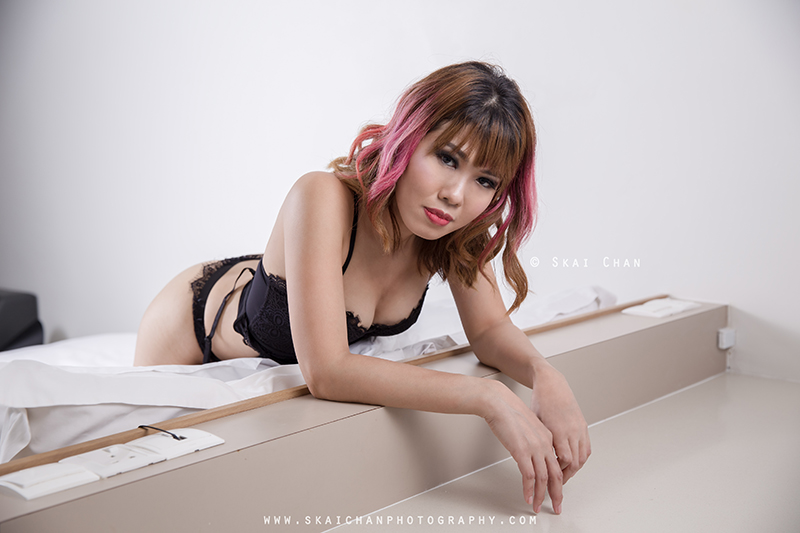
▲Boudoir photography in a studio
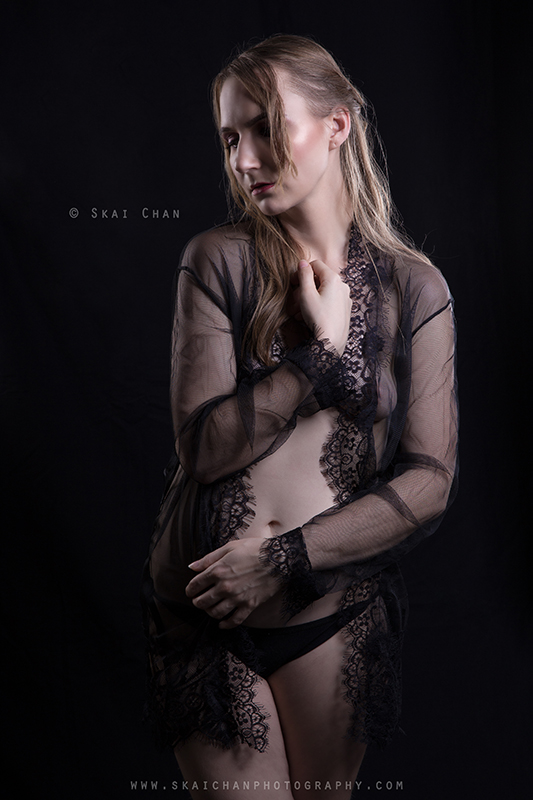
A photography studio can be a good choice if you want portraits with controlled lighting, simple backgrounds or a more editorial appearance. Studios are often designed to accommodate lighting equipment and give the photographer greater flexibility than a small bedroom or hotel room. However, not all studios are furnished for boudoir photography, and the difference matters.
I've photographed a number of boudoir and intimate sessions in my home studio, so I know that a studio can work well for certain concepts. Whether it's the best choice depends on the desired photographs, available furniture, privacy arrangements and the practical conditions at the time of booking.
Choosing a Suitable Studio
If you're looking for modelling-portfolio-style boudoir portraits against a plain background, a conventional photography studio may be ideal. On the other hand, if you want relaxed photographs on a comfortable bed or sofa, check whether the studio has suitable furniture. A plain backdrop and a stool cannot automatically replace the atmosphere of a furnished bedroom.
When I was newer to photography, a client chose a studio instead of a hotel to reduce the venue cost. She wanted to recreate a reference photograph featuring a comfortable, low bed, but the studio didn't have the necessary furniture. We spent considerable time trying to reproduce the composition without the right setting. That experience reinforced something I still consider today: choosing the correct location can be more effective than trying to force a concept into an unsuitable one.
Some studios offer lifestyle sets with beds, sofas or decorative interiors, which may provide a useful middle ground between a conventional studio and a hotel. Before booking, ask for recent photographs of the actual set and confirm which furniture and equipment are included in the rental.
Studio Rental Time and Privacy
Studios commonly charge by the hour, so the total rental period must cover more than the time spent taking photographs. Depending on the arrangement, we may need time for makeup, hairstyling, lighting setup, outfit changes and packing up. If a makeup artist is involved, it's worth discussing whether makeup should be done at the venue and whether time has been allowed for any touch-ups.
Privacy is another important consideration. Some studios have CCTV for security, and you should find out whether cameras cover the shooting or changing areas. Don't assume that a rented studio is completely private simply because the door is closed. Ask the operator about surveillance, access by staff and any arrangements available for intimate photography before making payment.
If you're considering my home studio, please check its current facilities and suitability with me before booking. I prefer to discuss the intended concept first rather than recommend a studio session that may not meet your needs.
Other Indoor Locations
▲Boudoir photography in an indoor setting
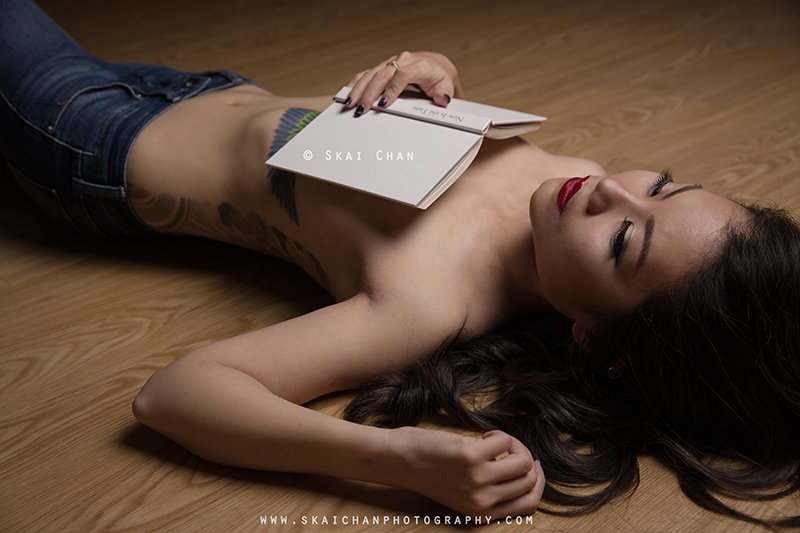
Boudoir photography isn't restricted to bedrooms, hotels and studios. Depending on the concept, other indoor spaces may work too, including a private office, an apartment belonging to someone you know or a distinctive interior with suitable furnishings. A location that wouldn't normally be associated with boudoir photography can sometimes produce interesting photographs because of its architecture, textures or lighting.
The essential requirement is permission to use the space for the intended photography. Check access, privacy, safety and whether the venue permits the clothing, equipment and activities involved. I wouldn't recommend entering abandoned or restricted premises without proper authorisation, especially when there may be structural hazards or other safety concerns.
A visually interesting location isn't necessarily practical. Before committing, it's worth sharing photographs of the space with me so I can assess whether it suits your ideas and whether additional lighting or other arrangements would be needed.
Outdoor Boudoir Photography
▲Outdoor boudoir photography
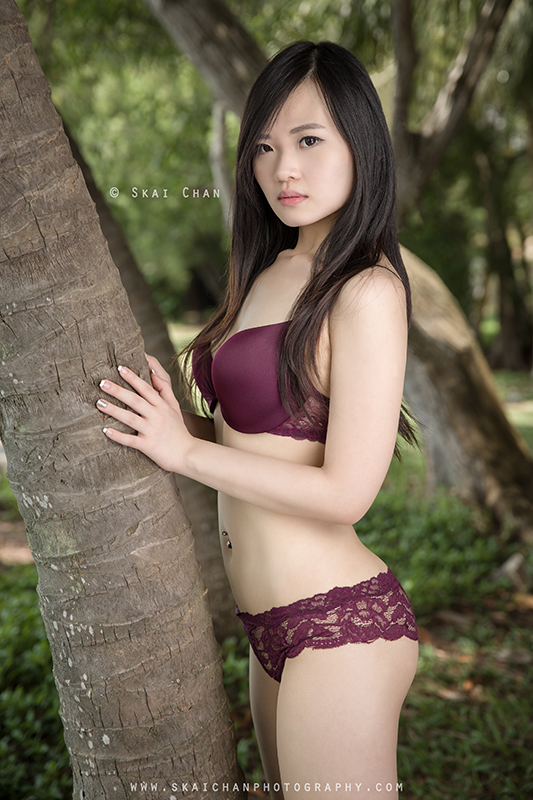
Boudoir photography is often associated with private bedrooms, but there's no creative rule that every intimate portrait must be taken indoors. Outdoor settings can offer greenery, open space and natural surroundings that are difficult to recreate in a room. The result may feel more like an artistic or lifestyle portrait than a traditional bedroom boudoir photograph, depending on the clothing and posing.
The main challenge in Singapore is finding a suitable location where the shoot won't interfere with other people and where the client can feel comfortable. Public spaces are not private, and passers-by may appear unexpectedly. Clothing that resembles swimwear may be appropriate in some beach settings, but that doesn't mean every revealing outfit or pose is suitable for every public location.
I would plan outdoor intimate photography around the location's rules, the expected number of visitors, the availability of a private changing area and the level of coverage you prefer. Public nudity or exposure should not be part of the plan. We also need to consider weather, heat, insects, uneven ground and how easily I can transport and use lighting equipment.
For someone who values privacy above all else, an outdoor session may not be the most comfortable option. However, if you like natural surroundings and are happy with an appropriate clothing style, it can offer photographs that feel very different from a conventional indoor boudoir session.
Special Boudoir Settings
Some clients choose a venue because they have a particular feature in mind, such as a bathtub or sofa. These aren't separate location categories, but they can influence which hotel, home or studio is worth considering. If a specific photograph depends on a piece of furniture, it's better to confirm that it exists before booking the venue.
Bathtub Boudoir Photography
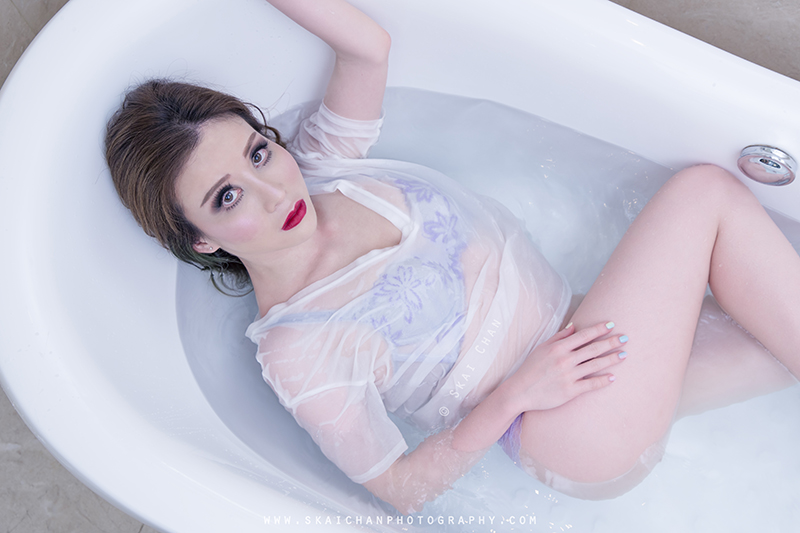
▲Bathtub boudoir photography
Bathtub boudoir photography can create a different mood from portraits taken on a bed or sofa. Water, reflections, wet hair and fabric can all contribute to the composition, whether the intended result is romantic, dramatic or playful. However, having a bathtub available doesn't automatically mean it's suitable for the photographs you have in mind.
Many homes in Singapore don't have bathtubs, and not every hotel room includes one. Even when a bathtub is available, its shape, size, surrounding walls and bathroom layout may limit camera angles and lighting. A bathtub positioned tightly against several walls can be especially restrictive, while a visually plain bathroom may not match the atmosphere of your reference photographs.
If bathtub photography is important to you, send me photographs of the actual bathtub and bathroom before booking. We should also consider whether the surfaces are slippery, whether electrical lighting equipment can be positioned safely away from water and how much time will be needed to prepare and clean up the setting.
Sofa Boudoir Photography
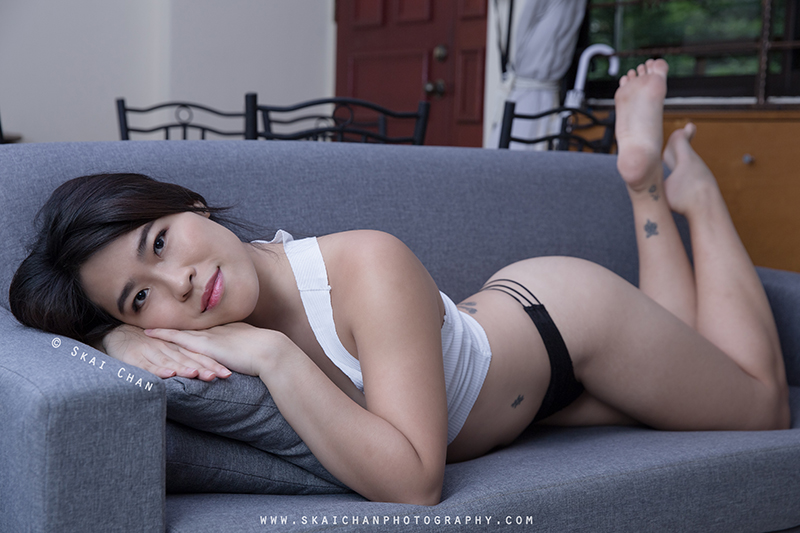
▲Boudoir photography using a sofa
A sofa can be surprisingly versatile for boudoir photography. It provides opportunities for sitting, reclining, leaning against the armrest and creating poses that feel more relaxed than standing against a plain background. Depending on the styling, a sofa can support anything from casual lifestyle portraits to more deliberate, sensual compositions.
Its design matters, though. The height of the seat, shape of the armrests, upholstery colour and surrounding background all affect what we can do with it. A sofa that looks beautiful in a furniture catalogue may be awkward for certain poses, especially if the room leaves little space to photograph it from different angles.
If your home or hotel has a sofa that you'd like to include, show me a photograph of it together with the surrounding area. That will help me judge whether it fits the intended concept and whether we should plan other setups as well.
Comparing Boudoir Photoshoot Locations
Each option has trade-offs. The following comparison is a starting point rather than a fixed ranking, since the suitability of any venue depends on its actual layout and the photographs you want.
Location
Main Advantages
Things to Consider
Hotel
Attractive interiors, furnished setting, possible staycation
Room cost, usable space, mirrors, venue rules
Private Home
Familiar surroundings, wardrobe access, no separate rental
Clutter, household members, privacy, available space
Rental time, furniture, CCTV, changing arrangements
Other Indoor Venue
Distinctive interiors and creative possibilities
Permission, access, safety, privacy and lighting
Outdoors
Natural scenery, open surroundings, different visual style
Public visibility, weather, clothing, changing facilities
If you want a classic, romantic boudoir look, I'd usually begin by considering a suitable hotel room or a well-prepared home. For clean, controlled portraits with a plain background, a studio may be more practical. If your concept relies on a bathtub, a particular sofa or an outdoor setting, that requirement should guide the venue search from the beginning.
How to Choose Your Boudoir Photoshoot Location
Rather than starting with a list of hotels or studios, I suggest starting with the photographs you want. Collect a few references showing the mood, background, furniture and lighting that appeal to you. We can then discuss which type of venue is most likely to support those ideas without unnecessary compromises.
Budget is important, but it shouldn't be considered in isolation. A cheaper venue may require more time to rearrange furniture or work around an unsuitable background, while a more expensive room may offer little advantage if its layout doesn't suit the concept. I prefer to assess the overall practicality of the location instead of judging it purely by appearance or price.
I also encourage clients to be realistic about the number of setups they want. Moving between a bed, bathtub and sofa, changing outfits and adjusting lighting can take a substantial part of the session. If you're planning several distinct looks, we should allow enough time rather than rush through them. My boudoir preparation guide explains how outfits and session duration affect the overall plan.
Before You Book a Venue
If you're booking a hotel or studio specifically for your boudoir session, please send me the listing or photographs of your shortlisted venue before paying for it. If you're considering your own home, photographs of the intended bedroom or living room are equally helpful. I can assess the backgrounds, layout, lighting and space for equipment, and discuss whether the location suits the photographs you have in mind. It's much easier to identify potential problems before a non-refundable reservation than after we've arrived.
Photographs and layout:
Request recent images of the actual room or studio set, including the bed, sofa, bathroom and available floor space.
Permission:
Confirm that the venue permits the intended photography, equipment and number of people involved.
Privacy:
Check who can enter the area, whether CCTV is present and where outfit changes can take place.
Lighting:
Consider windows, mirrors, glass and whether there is room for professional lighting equipment.
Furniture:
Make sure any bed, bathtub, sofa or other feature needed for your concept is actually available.
Timing:
Allow for makeup, setup, outfit changes, photography, packing and the venue's check-in or checkout requirements.
Cost:
Understand the rental price, additional charges and cancellation terms before committing.
Comfort and safety:
Check cleanliness, temperature, accessibility and any hazards relevant to the planned poses or setting.
My assessment is based on the photographs and information available, so I can't guarantee that every detail will be apparent before the shoot. Still, discussing the location early gives us a better chance to prepare, choose a suitable package and make good use of the session time.
Conclusion
There isn't a single best location for every boudoir photoshoot. Hotels, homes, studios and outdoor settings offer different possibilities, and each comes with practical considerations. What matters most is whether the location supports the photographs you want to create.
Through my experiences, I've learnt that small details such as furniture placement, privacy and available working space can make a significant difference. A location doesn't need to be luxurious, but it should give us the flexibility to work comfortably and make good use of our time.
If you're considering a session with me, take a look at my boudoir photography service. You're welcome to share your preferred style, reference photographs and shortlisted venues during our consultation so we can plan a suitable setting before you make further arrangements.
♥
Enjoyed This Article?
I've been sharing photography tips and experiences since 2012. If this article helped you, here are a few ways to show your appreciation.

 Scan QR to visit this website