My perspective on the assumptions surrounding bikini photoshoots, why some concerns exist and what a professional session can actually be like.
Why Bikini Photography Attracts So Many Assumptions
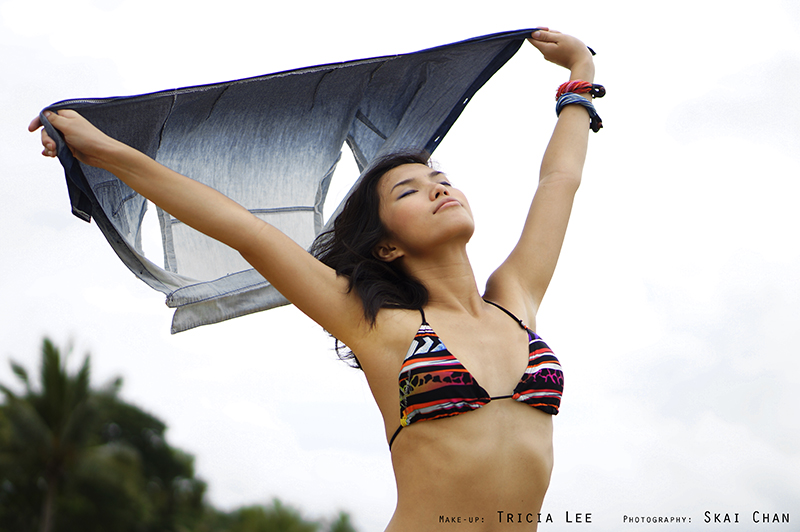
▲A bikini photograph can be about much more than simply showing skin.
Bikini photography is one of those genres that people can form an opinion about before they've ever experienced a professional photoshoot. Some associate it immediately with professional models and fashion campaigns. Others think of influencers, glamour photographs or social media. Some associate it with sexuality, objectification or questionable photographers.
I understand why these different impressions exist. Over the years, I've seen bikini photographs ranging from tasteful and beautifully produced work to photographs that I personally find uncomfortable or poorly executed. I've also encountered very different attitudes towards bikini photography from models, clients, photographers and members of the public.
What I've learned is that the bikini itself tells us surprisingly little about the photograph we're going to create. The photographer's intention, the client's objective, posing, expression, lighting, location, styling, composition and boundaries all affect the final result.
That's why I don't think bikini photography should automatically be praised as empowering, dismissed as sexual or treated as something suitable only for certain kinds of people. Those are all generalisations. A better question is: what kind of photographs are we actually creating, and how is the photoshoot being conducted?
In this article, I want to address some of the misconceptions I've encountered and share how I look at them as a photographer.
Is Bikini Photography Inherently Sexual or Objectifying?
This is probably the biggest misconception surrounding bikini photography, and it's also more complicated than simply saying, "No, it isn't."
A bikini naturally reveals more of the body than most everyday clothing, so it's understandable that people may associate it with attractiveness, sensuality or sexuality. However, showing more skin doesn't automatically determine the intention or mood of a photograph.
I've photographed bikini concepts that are cheerful, sporty, stylish, glamorous, elegant, artistic and sensual. These photographs may involve exactly the same amount of clothing, yet communicate completely different things.
A Bikini Doesn't Determine the Photograph
One of the lessons I've learned from portrait photography is that clothing alone doesn't decide whether an image looks tasteful. A bikini can be photographed tastefully, while someone wearing considerably more clothing can still be photographed in a deliberately sexualised way.
Posing makes a difference. Expression makes a difference. So do the camera angle, lighting, composition and the photographer's intention. Even the way a photographer directs someone's hands, body and eyes can completely change how the photograph feels.
This is why I don't automatically treat bikini photography as "sexy photography". If a client wants something cheerful and lifestyle-oriented, I shouldn't force her into seductive poses simply because she's wearing swimwear. Likewise, if an adult client specifically wants a tasteful glamour or sensual direction and I'm comfortable with the concept, that can be planned accordingly.
The outfit gives us possibilities. It doesn't dictate the story.
The Concern About Objectification Isn't Imaginary
At the same time, I don't want to dismiss concerns about objectification as though they are completely baseless. I've seen bikini photographs where almost all the attention appears to be placed on particular body parts rather than the person, and I've seen photography activities where attracting attention seems more important than creating meaningful photographs.
This is one reason I think people should look beyond the label "professional photographer". Study the photographer's actual portfolio. Look at how people are portrayed, whether every woman is photographed in the same sexualised manner and whether the work reflects the kind of images you would actually want of yourself.
For my own work, I prefer to understand the person and the objective first. Someone's physique can certainly be an important visual element in bikini photography, but she is still a person with her own personality, preferences and boundaries.
A photograph can celebrate someone's body without reducing the entire person to it.
Are Bikini Photoshoots Only for Professional Models?
No. In fact, the people I've photographed aren't professional models.
Professional models may have advantages because they're accustomed to cameras, understand their angles and can move quickly between deliberate poses. However, modelling experience isn't a requirement for having meaningful or flattering photographs of yourself.
A non-model may simply need a different kind of direction. Instead of expecting her to arrive with a collection of poses ready, I can guide her according to what I'm seeing through my camera. Some people respond well to precise posing instructions, while others look much better when I give them simple movements or actions and allow the photographs to feel more natural.
This is also why I distinguish between fashion posing, where the pose is deliberately presented to the camera, and lifestyle posing, where my direction is less obvious in the final photograph. I explain this in much more detail in my bikini posing guide.
You don't have to become a model before you're allowed to have professional photographs taken.
Do You Need a "Perfect" Bikini Body?
The idea of a "bikini body" has probably stopped many people from even considering a photoshoot. When bikini photographs are constantly associated with models, influencers and carefully selected social media images, it's easy to think that you need a particular body shape before you should stand in front of a camera wearing one.
From a photographer's point of view, bodies don't come with one universal set of ideal proportions. Different people have different heights, builds, curves, muscle definition and features they personally like or dislike. My job isn't to compare everyone against the same model.
What matters photographically is how I work with the person in front of me. Posing, posture, camera height, perspective, lighting and body angle can all change how someone's proportions appear in a photograph. The right approach for one person may therefore be completely different from what works for another.
I also prefer to find out what someone likes about herself instead of assuming that every client wants to hide the same things. Someone who trains regularly may want to emphasise her athletic physique. Another person may love her curves. Someone else may care far more about looking cheerful and confident than about emphasising her body at all.
The goal isn't to prove that you meet somebody else's definition of a bikini body. It's to photograph your body in a flattering way that suits what you want from the session.
Are Bikini Photoshoots Only for Young Women?
Bikini photography is commonly associated with younger models, influencers and social media, but I don't believe adulthood comes with an expiry date for wanting good photographs of yourself.
People arrange professional portraits for many reasons at different stages of life. Someone may want to document a fitness transformation, celebrate her current appearance, regain confidence, create photographs for herself or her partner, or simply do something she has always wanted to try.
What may change with age isn't whether someone is "allowed" to do a bikini photoshoot, but what she wants from it. A mature client may prefer something elegant and understated. Another may want glamour. Someone else may want cheerful lifestyle photographs by the beach.
I would rather understand the individual than decide what she should or shouldn't do based on her age.
Do You Need to Know How to Pose?
This concern comes up frequently in portrait photography, but it becomes even more noticeable with swimwear because there is less clothing to disguise body position. People may worry about where to put their hands, how to stand, whether their stomach looks flattering or whether they'll simply freeze when the camera comes out.
You don't need to arrive knowing how to pose. That's part of what I'm there to help with.
At the same time, posing isn't simply about memorising ten "best bikini poses". Different bodies, personalities and photographic styles require different direction. Even someone who has studied lots of model poses on social media may discover that a more natural lifestyle approach works better for her once we actually start shooting.
I've also experienced the opposite. Someone I expect to suit lifestyle photographs may respond much better to deliberate fashion posing because clear instructions make her feel more secure.
This is why I prefer to experiment, observe and adapt instead of forcing every person through exactly the same posing routine.
Is Bikini Photography Easy Because There's Less Clothing?
A bikini may be physically smaller than a gown or elaborate fashion outfit, but that doesn't make the photography simpler.
In some ways, having less clothing makes certain details more important. Body position becomes more visible. Poor posture is harder to hide. The direction of light across the body matters. Camera perspective can change proportions. Hair, makeup, expressions, background and posing all become important parts of the photograph.
Outdoor bikini photography adds another layer of difficulty. At a beach or swimming pool, I may have to work with harsh sunlight, changing clouds, reflections, wind, crowds, restrictions and a background I cannot control. If I'm using professional off-camera lighting, I also have to balance my flash with the existing environment rather than simply photographing whatever light happens to be there.
Some of my bikini photoshoots have required considerably more planning and problem-solving than photographs where the subject was wearing far more clothing.
Can Any Photographer Do Bikini Photography?
Technically, anyone with a camera can take a photograph of someone wearing a bikini. That's very different from saying everyone will produce the same result.
Portrait photography involves more than camera settings. A photographer has to understand light, perspective, composition and timing, while also communicating with the person in front of the camera. Bikini photography adds another important consideration: because the client may feel more physically exposed, poor communication or insensitive direction can make the experience uncomfortable very quickly.
The photographer also needs judgement. Not every possible pose should be used simply because it shows more of the body. Not every camera angle is flattering. Not every photograph needs to be made more provocative.
When choosing a photographer, I would therefore look at the actual work rather than assuming that owning professional equipment or having lots of social media engagement automatically means someone is suitable for you.
Does Everything Need Heavy Photoshop?
Another misconception is that good bikini photographs are mainly created afterwards through heavy retouching.
Post-production is part of professional photography, but I prefer to solve as much as possible during the actual photoshoot. Good lighting, camera angle, posing and composition give me a much stronger starting point than relying on editing to rescue a poorly photographed image.
The amount of retouching required also depends on the intended result. A natural lifestyle photograph doesn't necessarily need the same treatment as a polished beauty or glamour image. More advanced retouching can certainly be used when appropriate, but it shouldn't replace the photography itself.
I would rather make someone look flattering through photography first and use post-production to refine the result.
Do All Bikini Photoshoots Look the Same?
This is one misconception that disappears quickly when you look through enough photographs. A bikini describes the clothing, not the photographic style.
I've approached different bikini photoshoots as lifestyle, fashion, glamour, fitness, artistic and sensual portraiture. Even within the same session, I may change the direction. A cheerful set can become more polished and glamorous later, or I may begin with simpler lifestyle photographs before experimenting with stronger fashion poses.
The person's personality, wardrobe, physique, makeup, location, lighting and objectives all affect what I create. Weather and other unexpected circumstances can change the direction as well.
This is why I don't want every person who comes to me for bikini photography to leave with exactly the same photographs. In my article on how I personalise bikini photoshoots, I share real examples of how I've changed my approach for different people and situations.
Does a Bikini Photoshoot Have to Be at the Beach?
The beach is an obvious choice because swimwear naturally belongs there, and Singapore gives us several outdoor possibilities. It can provide water, sand, greenery and sunset light within the same general environment.
However, it isn't the only option. I've also photographed bikini sessions at swimming pools and in a photography studio. Hotels, suitable private properties and more unconventional environments can work depending on the concept and whether photography is permitted.
Each option changes the photographs. A beach gives us space and natural environmental elements, but we have less control over weather and crowds. A swimming pool can create a cleaner lifestyle or resort feeling, although access and photography restrictions may apply. A studio provides much greater control over lighting and privacy, but the photographs naturally feel different from an outdoor swimwear setting.
I don't think it would be responsible for me to tell someone that every bikini photoshoot is automatically safe simply because the photographer calls himself a professional. Personal safety is a legitimate consideration, particularly when you're meeting someone you don't know well and may be wearing revealing clothing.
However, the genre itself doesn't tell you whether a situation is safe. The photographer, location, working arrangement and boundaries matter much more.
Before working with someone, look at more than a handful of attractive portfolio photographs. Check whether the photographer has an established identity and body of work, read independent reviews where available, look at how long he or she has been working, and pay attention to how the photographer communicates before the session.
The location matters too. A busy public beach is very different from an unfamiliar private room. Privacy can be desirable for a sensitive photoshoot, but greater privacy also means you should be more careful about whom you're trusting and where you're going.
Most importantly, don't ignore behaviour that makes you uncomfortable simply because you don't want to appear difficult. Professionalism should exist before, during and after the photoshoot.
Another understandable concern is privacy. Some people are perfectly comfortable having selected bikini photographs included in a photographer's portfolio, while others may want the experience and photographs entirely for themselves.
This is something that should be understood before booking rather than assumed afterwards. Different photographers have different business models and policies regarding portfolio usage, privacy and image rights.
For my own photography services, I state my privacy arrangements as part of my booking information so that clients can decide what they're comfortable with before committing to the session. If privacy is important to you, discuss it before the photoshoot rather than waiting until the photographs have already been created.
The important point is that wearing a bikini doesn't automatically mean you have abandoned your concern for privacy.
Does Agreeing to a Bikini Photoshoot Mean Agreeing to More?
No. Agreeing to be photographed in a bikini means agreeing to the bikini photoshoot that has been discussed. It doesn't automatically mean agreeing to lingerie, implied nude, nude photography or increasingly provocative concepts.
This sounds obvious, but I think it's important enough to state clearly because boundaries can become blurred when people assume that someone who is comfortable showing a certain amount of skin must therefore be comfortable showing more.
I've photographed people with very different comfort levels. Some are comfortable with more sensual concepts; others aren't. Some may be open to an idea in one context but not another. I don't see these differences as a scale where being "more open-minded" automatically makes someone a better model or client.
If we want to explore a different concept, it should be discussed rather than assumed.
A person's comfort level is information I work with, not a challenge for me to overcome.
What Makes a Bikini Photoshoot Professional?
For me, professionalism isn't created simply by using an expensive camera, flash equipment or calling the session "professional photography". It comes from the entire process.
Before the shoot, I want to understand what the client is trying to achieve, what kind of photographs she likes, her wardrobe, location preferences and anything she's uncomfortable with. This gives me a direction instead of turning up and improvising everything around the fact that she's wearing a bikini.
During the session, I consider lighting, posing, expression, camera angle, background and the person's comfort. If something isn't working, I change it. If the weather changes, the location becomes crowded or a planned concept doesn't suit the person as well as expected, I adapt rather than forcing the original plan.
Professionalism also includes respecting agreed boundaries and communicating clearly. A client shouldn't have to guess what the photographer is trying to achieve or feel pressured into something simply because she's already at the photoshoot.
Afterwards, proper selection and post-production are part of completing the work. A professional photoshoot isn't just the time spent pressing the shutter button; it's the planning, photography, problem-solving and finishing that come together to produce the final images.
My View After Photographing Bikini Sessions
When I first wrote about the stigma surrounding bikini photography many years ago, I was frustrated that people could judge an entire genre - and sometimes the people participating in it - simply because of the amount of clothing involved.
I still disagree with that kind of judgement, but my view today is more nuanced. I've seen enough photography to understand why some negative impressions exist. There are poorly produced bikini photographs. There can be objectification. There can be photographers with questionable intentions. There are also genuine concerns around privacy, safety and personal boundaries.
But none of those things defines bikini photography as a whole.
I've also experienced bikini photoshoots as creative portrait sessions where we're thinking about personality, lighting, location, body language, colour, movement, confidence and the client's goals. I've had to solve problems caused by weather, crowds and difficult lighting. I've changed concepts halfway through shoots because another direction suited the person better. I've worked with people who could pose confidently and others who needed much more guidance.
These experiences are why I don't see bikini photography as simply "taking photographs of someone wearing less clothing". Like other forms of portrait photography, the quality of the result depends heavily on the people involved and the decisions being made.
You also don't need to prove anything by doing a bikini photoshoot. If you're uncomfortable with the idea, there's nothing wrong with deciding that it isn't for you. But if you genuinely want to do one, I don't think stereotypes about age, body shape, modelling experience or what other people might assume should automatically make that decision for you either.
A bikini is an outfit. What the photograph becomes depends on what we choose to create with it.
If you're considering such a session with me, you can explore my bikini photography sessions in Singapore to see my portfolio, photography approach, preparation information, rates and other details before deciding whether I'm the right photographer for you.
♥
Enjoyed This Article?
I've been sharing photography tips and experiences since 2012. If this article helped you, here are a few ways to show your appreciation.

 Scan QR to visit this website