Despite SP's confidence in their product quality and customer satisfaction, they do not allow public reviews - no Facebook or Google review features are available. Why?
So far, I've only seen positive reviews posted directly by SP on their own page. I won't speculate on how genuine those are, whether vouchers were given, or whether those reviewers are still using CCS today. However, many Tengah residents seem to mock those "reviews".
The majority of CCS users I have spoken to, both online and offline, are hostile towards CCS. Yet SP's staff on the ground often tell people that there are only a handful of dissatisfied users. Why the disconnect?
SP has claimed that they faced "some" teething issues initially due to Covid-19, suggesting that work was rushed during that period. But they stop short of admitting that even the latest batches of CCS are still giving residents problems. This selective acknowledgment - a kind of strategic humility - creates the impression of honesty while potentially misleading new users into believing that current CCS systems no longer face issues. And even if the work was rushed, SP should take full responsibility for it. Why are end users being punished for trusting them instead?
Meanwhile, social media is flooded with sponsored posts that disgust many Tengah residents who are fully aware of the CCS problems. Apparently, glossy ads are cheaper than fixing leaks - but residents aren't buying the hype.
Why not hear from an actual user instead?
About the Reviewer
I am an actual CCS user - not an "influenza" spreading glossy ads like a virus, not "news" media. Unlike the sponsored voices that many residents perceive as morally disengaged, I refuse to play along. SP did not sponsor me to write this review.
I am documenting my journey as someone who invested in CCS, endured its failures, and saw firsthand how feedback is managed. My perspective comes from direct experience and conversations with hundreds of current and former CCS users.
I only managed to use the system for a few months before SP's endless rectification works culminated in a "waterfall" incident during Halloween 2024, which stopped me from using it completely.
I chose to write this review because transparency matters. Future users deserve to know what it's truly like to live with CCS - beyond polished marketing and censored social media pages. I want to share the reality: the frustrations, the disruptions, and the unanswered questions.
In short, this page is my attempt to give voice to everyone, so others can make informed decisions. Marketing may silence leaks in glossy brochures, but it cannot silence the lived reality of residents.
My Observations
SP has long stopped posting updates on their Telegram channel. Latest posts mostly received overwhelmingly negative reactions - "angry", "middle finger", "poop", and "clown" emoji reactions.
All negative comments on their Facebook posts are usually deleted within 24 hours. It's unclear whether those Facebook users were banned afterward, but the pattern suggests tight moderation of criticism.
In late 2025, a man claiming to be from Blackbox visited my unit. He said his company was hired by SP to conduct a survey, with results released only to SP. He shared that most feedback he received thus far was critical. My question is: if SP is so confident about customer satisfaction and their staff "walking the ground", why would they still need to hire a third-party survey company?
I see their service recovery staff (they named themselves the Engagement Team) in Tengah often. This may imply the high number of engagements required. Poor victims.
Both pioneer and latest TOP Tengah estates' users are facing issues, showing that problems are not isolated to early adopters but continue across new developments.
There is a huge number of sponsored social media posts regarding CCS, often polished and repetitive. Many residents perceive these as attempts to drown out genuine criticism rather than address the real issues.
Tengah CCS Review
Overview
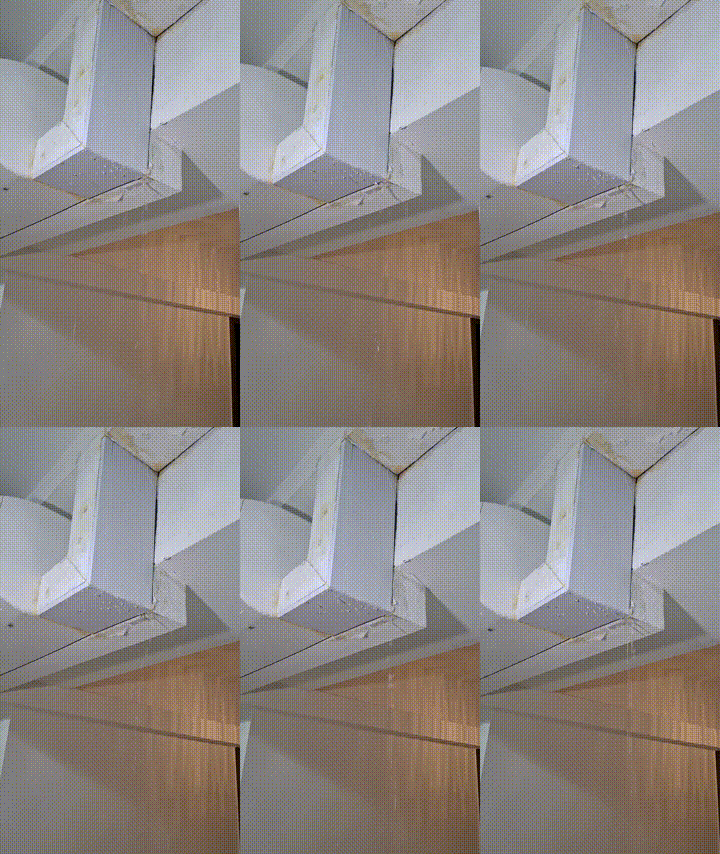
SP presents itself as "sincere" in solving problems for users. Whether it's the first, third, tenth, or hundredth time your CCS decides to bless you with condensation or leaking, they'll show up to fix it - temporarily, of course - as long as you're still under warranty. The catch? You just need to sacrifice your annual leave: one day for technicians to inspect, another for repair, and yet another for painters to smear on their half-baked touch-up.
One resident from Tengah Plantation Grange estate reported over 30 CCS issues. He didn't even bother counting how many times SP/Daikin visited, since each "fix" could stretch across one to three days. Repairs became practically a lifestyle subscription - something never stated in the contract.
As for me, I kept my renovation simple: no false ceiling, no box-up, and I even held back from buying furniture while waiting months for my defective CCS to be patched up - five disastrous failures in total (four times PU). You'd think this simplicity would make repairs easier. Yet it still took a day for technicians to confirm the obvious (yes, it's leaking), another day for workers to redo insulation, and another for painters to leave their signature: unfixed damages and fresh paint droplets decorating my floor tiles and skirtings. Efficiency at its finest.
CCS Safety Hazards
Slip-and-slide adventure:
When condensation and leaks blessed our floor, my wife and I nearly auditioned for a CCS-sponsored stunt show. She stepped onto a slick patch of dripped water. A month after the waterfall incident, I landed on a full puddle. Forget bungee jumping or skydiving - CCS offers surprise slip-and-slide thrills right in your living room.
Russian Roulette, CCS edition:
During the waterfall episode, if we hadn't noticed in time, my photography gear would have been drowned and we might have been electrocuted. It felt like playing Russian Roulette - every leak is a gamble, and one day the "bullet" might hit. CCS turns daily life into a deadly lottery, minus the casino lights.
CCS: The world's first cooling system where survival is optional.
System Reliability
Interior design:
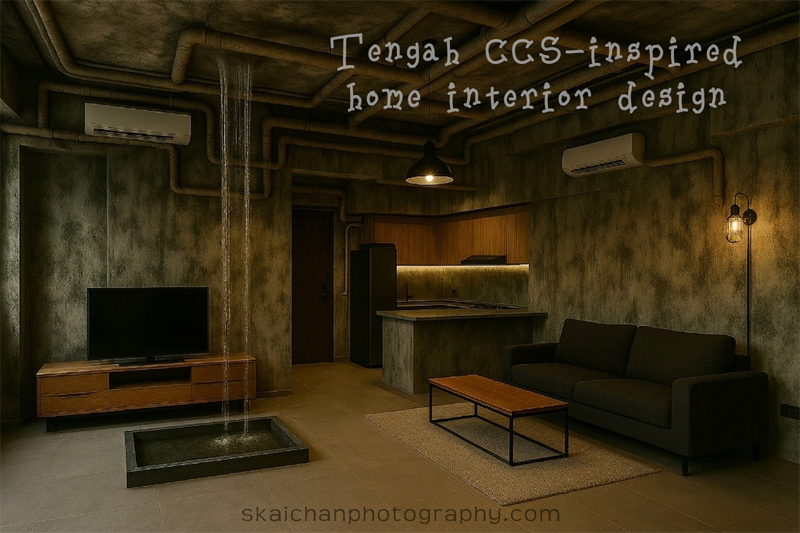
CCS is a rustic, industrial designer's dream. With condensation, leaks, and mould, it blends seamlessly into the décor. Algae-proof too. And with its "free waterfall feature" from trunking leaks, it's practically a built-in fountain. Who needs luxury when you've got CCS?
Temperature:
CCS at 25°C is basically a sauna - at least sometimes. Most users I've spoken to agree it's not cold unless you stand directly in front of the FCU (SP's staff did exactly that and proudly celebrated the "coolness"). With my old Starmex at 26°C, I had to hide under a blanket and still shivered. CCS at 25°C? Sometimes you sweat, sometimes you don't - unpredictability is part of the charm. Strangely, some corners of the room even show much lower temperature readings, as if CCS is playing hide-and-seek with the cold air.
Cooling speed:
CCS takes forever to cool a room. Eco-friendly, perhaps, since you'll change your mind before it ever gets "cold". Perfect for indecisive homeowners who enjoy waiting as part of the experience.
Wireless control:
CCS isn't designed for smart homes, but you can still wrestle with the SP app. First, you need to sync it - mine decided to control random FCUs instead. Later, I saw more complaints on Telegram. Residents joked that QR codes must have been swapped for entertainment.
Ease of control:
Eco-friendly by inconvenience. Whenever the app goes into maintenance mode, CCS becomes uncontrollable. Users must embark on a scavenger hunt for the physical remote just to switch it on. Exercise included at no extra charge.
Poor trunking touch-up:
Upon receiving my keys, the CCS trunking area looked like a DIY horror show - badly finished with plenty of gaps, some large enough to host insects and bugs. Apparently, "premium housing" decorated with CCS now comes with complimentary wildlife condos.
Noise Level
Weird, noisy design:
The FCU has a valve to pause chilled water once it thinks the room temperature has reached the setting we set. Somehow, the valve does cause noise, and some users have noticed a loud noise that will definitely disturb sleep.
Fan speed:
CCS delivers peak performance only if you crank the fan to the highest (third) speed - which sounds more like a hairdryer marathon than cooling. Fan speed two made the room stuffy at times, although the noise was already disturbing enough. We tried the so-called "sleep" mode, advertised as quiet, but it felt more like fan speed one: barely moving air, and the room got warmer instead. In short, you can choose between background noise or background heat. Bedtime entertainment for anyone who enjoys insomnia.
Cost Efficiency
Shifting of FCU:
The original location of the FCU in the living room leaned awkwardly closer to the windows, making cooling inefficient. When I requested to shift it more towards the centre before installation, I was made to pay extra. Charging homeowners for correcting poor design placement feels unfair - especially when efficiency is supposed to be the selling point.
Chilled water rate reality:
My chilled water bill alone was around $40 monthly, not including the electricity for the FCU, with usage of one FCU in the master bedroom for 7–9 hours daily at 25°C. Meanwhile, another Tengah resident using conventional air-con with two FCUs at the same usage pays about $50 for electricity. I feel practically saintly - donating so much extra money, not even to a charity, but to inefficiency disguised as innovation.
Technicians
Hardworking ground staff:
I spotted them at Tengah on Day 2 of CNY 2026. While everyone else enjoyed their holidays, these poor souls were busy fixing CCS victims' "water features". Condensation, leaks, or full-blown waterfalls - CCS keeps them employed year-round. Job security at its finest.
Touch-up Team
Painters without paint:
For the touch-up work after repairs, the painters arrived without bringing paint and cheerfully asked me to provide it - even though the paint code had already been communicated beforehand. Apparently, the new cost-saving strategy is to outsource basic supplies to homeowners. The trick? If I didn't hand over my own paint, the touch-up would be delayed. Brilliant efficiency: you pay for the system, host the workers, and now supply the paint too.
Hardworking painters:
The first time they came to touch up my walls (badly damaged during repair), they left at 11 pm. Impressive dedication - though homeowners still had to scrub the house for hours afterward. CCS victims are strong people who can survive on little sleep. The delay? Workers arrived after lunch instead of the scheduled morning. As a bonus, they didn't even clear the debris on top of the trunking outside my bedrooms. Gaps and holes left untouched - perfect new condos for insects.
Persistent painters:
During the second touch-up after yet another disastrous repair, the painters struggled until the very last minute. They admitted they were given only three hours to cover the entire trunking from my main door into my master bedroom. To save time, they skipped filing and sanding, and just slapped on paint. The result? Horrible. One painter was later sent back to redo everything, as if homeowners owe SP their entire day to host workers. Funny, I don't recall the CCS contract mentioning punishment clauses for users.
Service Recovery Team
Daring staff:
Sharp and bold, they dare to challenge not only their company but even the government's sustainability campaign that states air-con should be kept at 25°C. When users complained that 25°C wasn't cooling, their advice was simply: "Use CCS at 23°C or lower." Transparency stopped right there - no mention of the much higher chilled water bill waiting to ambush us. Brave, but conveniently selective.
Smart replies:
Many of my questions opened cans of worms. The staff's replies were masterful - they answered without answering, dodging responsibility like Olympic champions in corporate dodgeball. If avoiding accountability were a sport, they'd take home the gold.
Kings of small talk:
They visited during rounds of rectification. At times, staff engaged in small talk about families and daily life. To me, it felt more like a PR tactic to soften frustration than genuine concern. One staff member even asked why I hadn't cleaned my dusty windows - forgetting that their endless renovation work kept bringing dust back. Irony at its finest.
Call Centre
Hardworking staff:
Masters of repetition. Ask to speak to management, and you'll hear the same line on loop: "We are always ready to repair your CCS." Repeat your request, repeat their reply. It's like customer service karaoke.
Great teamwork:
Emails arrive unsigned, so you'll never know who answered. Mistakes magically belong to SP as a whole. Accountability dissolves into the team - if accountability even exists. Corporate camouflage at its finest.
Lightning-fast response time:
Replies often take several days, but conveniently land on Friday afternoons - perfect timing to ruin your weekend. Their responses are impressively short compared to my long, detailed emails. Minimalist art, but in customer service form.
Silent treatment specialists:
Sometimes, replies never arrive at all. Perhaps the safest way to avoid giving the wrong answer is to give no answer. Bold strategy - silence is golden, especially when it saves effort.
Facebook Admin
Hardworking page admin:
Residents report that negative reviews on their Facebook page often disappear within hours, keeping it squeaky clean and sparkling with positivity. Every post looks like a fan club meeting. Whether those users were banned or simply vanished remains a mystery - but spotless pages don't ask questions.
Table: CCS vs. Conventional Air-Con
Above: A Tengah resident chose two 24k + 18K BTU FCUs for her living room, instead of a single or even double 9k BTU CCS FCUs.
To give residents a clearer picture, here's a side-by-side comparison between Tengah's Centralised Cooling System (CCS) and conventional air-con systems. For fairness, the conventional column reflects established brands like Mitsubishi and Panasonic - trusted for reliability and efficiency - rather than cheaper, less proven options from newer or lower-quality manufacturers.
Aspect
CCS
Conventional Air-Con
Dangers
Water is denser than gas, and when leaks occur, users face risks of slipping, electrical hazards, and damage to furniture or carpentry.
Gas leaks are rare and usually not noticeable.
Trunking
Extra-thick trunking runs from the main door through the living room; unsightly and disruptive.
More compact trunking and don't infiltrate the living room as much; easier to conceal with false ceilings or boxing.
False Ceiling & Boxing Up
Condensation risks discourage boxing up or false ceilings; repairs may require cutting into ceilings.
Generally safe to conceal; repairs rarely require invasive ceiling work.
Carpentry
Placement of bulky trunking makes carpentry, such as custom cabinets in the living room, challenging.
Homeowners can freely build carpentry without obstruction from trunking.
Air-Con Ledge
No condenser installed, leaving the ledge empty. SP touts this as an advantage, but in reality it just means users can repurpose the space - for a picnic, a makeshift workstation, or even a pole dance studio.
Ledge is used for its intended purpose: housing condenser units. Most homeowners never step onto it in their lifetime.
Cooling Performance
Reports of poor cooling and occasional warm air; 9k BTU FCUs are insufficient for living rooms and some master bedrooms, as noted in NEA's guidelines.
Reliable cooling; BTU options sized appropriately for different room types.
Leaks & Condensation
Frequent leaks from FCUs, trunking, and risers; severe "waterfall" incidents reported.
No water leaks. Gas leaks are rare, unless due to bad workmanship; condensation manageable with proper installation and servicing.
Odours
Some users report foul smells from FCUs, which may recur soon after servicing.
Less common; regular servicing helps.
Start-Up Cost
CCS appears cheaper at first glance, but all FCUs are only 9k BTU - insufficient for larger spaces. Costs rise partly due to outsourcing layers (SP → Daikin → subcontractors), and in some cases, subcontractors may even have their own subcontractors.
Users can choose suitable BTU FCUs for each space. Larger units may cost more but deliver efficiency. Cheaper 9k BTU units remain an option, though with limited cooling. Deals with seller and installer.
Gas Top-Up
Main CCS condenser is managed by SP, so no gas top-up is required.
Gas top-up may be needed if trunking is poorly installed; otherwise, often unnecessary. For example, a Mitsubishi Starmex can run nearly a decade without top-up.
FCU Placement
Placements determined by SP. Relocation incurs fees, with longer shifts costing significantly more. The living room's FCU in 4-room flats is inefficient - near windows and undersized at 9k BTU.
Users can discuss optimal placement directly with suppliers.
Monthly Bills
Chilled water rate has been fixed at 10¢/kWh; higher than expected with limited transparency. CCS users are a small fraction of Singapore households, limiting influence on SP's decisions.
Electricity bills predictable; often cheaper for similar usage.
Long-Term Cost
Issues often require owners to take annual leave to accommodate SP's workers. Repair costs after warranty can be significant. Heavy users face high monthly bills.
Less frequent problems. Multiple repair options available after warranty. More affordable monthly bills.
Transparency
No clear data on chilled water consumption per room/temperature. No guarantee how many tries it would take for them to repair trunking.
Energy consumption data available; efficiency ratings published.
Servicing
Servicing monopolised by SP/Daikin; booking difficulties common. Users often told only weekday slots are available.
Wide choice of contractors; flexible servicing schedules.
Repair Schedule
Users often wait days or weeks for fully booked workers, leaving them without air-con during that period.
Users can approach various companies with faster availability for repair work.
Repair Disruption
Repairs often require trunking replacement, generate dust, and force homeowners to pack up; multiple visits often needed.
Repairs usually straightforward - FCUs and condenser - not trunking; minimal disruption.
Repair Chemicals
Condensation often spans the entire trunking. SP typically requires injection of PU foam - a chemical process that raises safety concerns for families. Replacing trunking causes wall damage and repainting, forcing residents to inhale more chemicals.
No PU injection required. Even if workmanship for trunking is poor, issues are usually limited to joint areas and easier to fix.
Communication with Workers
Many workers do not speak fluent English or have strong accents. Homeowners often rely on supervisors who may not stay throughout the repair work.
Wide range of companies to choose from, including many with workers who communicate more effectively.
Service Report
No resident reports receiving service reports after condensation or leaking cases.
Reputable companies provide service reports detailing issues, for transparency, helping prevent future problems.
System Reliability
Shared main trunking from the compressor means faults can affect multiple households; outages reported.
Independent units; faults isolated to individual households.
Cancellation
Requires SP's approval to terminate pipes outside the gate. Some users reported staff insisting on house entry for photo-taking before approval.
Units can be replaced or removed anytime - not subject to external approval.
Defective Product & Lemon Law
Many CCS users report receiving defective systems - condensation and leaks appearing soon after moving in. Some endure endless repair cycles that fail to resolve issues. Despite complaints to MPs and CASE, full refunds are not granted, and no Lemon Law protections have been invoked so far.
Conventional air-con companies are more responsive, often fearful of MP and CASE intervention. Refunds or replacements are more likely when defects are proven.
Customer Disputes
SP staff are well-trained to rebut and debate complaints, leaving users in difficult situations when issues arise. Instead of resolution, residents often face arguments. For example, after my CCS "waterfall" incident, their management told me it might not have happened if I had allowed them to repair the trunking for the sixth time.
Conventional air-con companies generally value their reputation and strive to address customer concerns, especially when defective products are involved.
Review Method
Victims have no way to leave public reviews - no Google page, no Facebook reviews. SP keeps feedback channels closed, ensuring negative experiences remain invisible.
Conventional air-con companies generally maintain Google or Facebook pages where customers can post genuine reviews, without manipulation of what is shown.
Condenser Management
Managed entirely by SP. Users don't need to arrange servicing themselves, but must lodge complaints with SP if the system fails.
Users contact the seller under warranty or choose from many service companies afterward, which they must pay for.
Noise
FCUs noisy at higher fan speeds; "sleep" mode provides weak cooling. No condenser noise, since units are centralised.
Quieter operation; sleep modes balance airflow and comfort. Outdoor condensers are placed at the air-con ledge; with BTO bathroom windows and doors closed, noise is barely noticeable unless poor materials are used by HDB.
CCS: thicker pipes, thinner patience.
Disclaimer: This comparison reflects resident experiences and publicly available product specifications. It is intended for informational purposes only and should not be taken as definitive technical evaluation.
The Few "Happy" CCS Users
The majority of Tengah residents I have spoken to, both online and offline, are horrified by the CCS experience. But I have seen on Telegram a handful who openly describe themselves as "happy" somehow.
A noticeable percentage of these self-described happy CCS users were already supportive long before they even received their keys to their Tengah flats. Some were vocal in defending CCS and even challenged users who had already started using CCS and were experiencing defects such as condensation and leaking.
It is important to note that many victims cannot cancel yet due to financial constraints, sunk cost fallacy, or cognitive dissonance. So please do not mistake the fact that existing users are still on CCS as proof that they are satisfied users.
The profiles of these so-called happy users vary, and different individuals face different situations. Common circumstances include:
They never used air-con in their previous home, so they think CCS is cooling enough - unaware that conventional air-con produces lower temperatures at the same setting and cools rooms faster.
They know little about air-con systems - for example, not realising that a 9k BTU FCU (the default CCS unit) is underpowered for a normal living room (larger than a 2-room flat), as shared by NEA.
They have never paid utility bills directly themselves (their parents handled the bills), so they are unaware of the actual costs and may not notice when bills are unusually high.
Some assume that air-conditioning naturally contributes a large share of monthly utility bills, and therefore think it is normal for chilled water charges to be so high.
They live in a 2-room flat (studio) and benefit from high U-Save subsidies from the government, so they don't feel the impact of high monthly bills yet.
They are not used to having air-con at home and only run it at 27°C, which minimises the effect of the high chilled water rate.
Their bills are paid by a child who doesn't live with them - neither investigates the chilled water rate closely.
Some are wealthy or generous enough that even paying 30% extra in utility bills compared to others does not bother them.
A small minority show strong defensiveness: some have difficulty accepting that they may have made a wrong choice, or feel uncomfortable when victims share negative experiences.
Some believe that CCS needs more sign-ups to lower the rate, so they support it in hopes that chilled water charges won't rise further - otherwise, more existing users might cancel, creating a vicious cycle.
Some are supportive of CCS mainly for eco-friendly reasons, even if practical issues remain - and the amount of materials wasted to redo trunking is not a concern to them.
Some are naturally optimistic and believe they will be lucky enough to avoid problems such as condensation, leaking, or waterfall incidents.
Summary: Most of the so-called happy users have yet to encounter serious issues (except for a couple of cases) and have not felt the impact of bills. Their optimism often comes from limited experience, subsidies, or lack of awareness - not from long-term usage. Cognitive dissonance and sunk cost fallacy also play a role, as some continue with CCS despite recognising its higher costs. And while only a few display defensiveness, the majority simply reflect different personal circumstances that shape their views.
Common Complaints & Issues
These are the recurring complaints I've heard from other CCS users - and experienced myself. Instead of a polite summary, here's the full, unfiltered list of issues that keep surfacing, growing longer each time CCS decides to surprise us.
Ugly trunking: Extra thick trunking runs from the main door through the living room, looking unsightly.
False ceiling issues: Homeowners often avoid boxing up or building false ceilings due to condensation risks. Repairs may require cutting through ceilings.
Incomplete painting: Touch-up work is sometimes left unfinished, forcing homeowners to sacrifice multiple annual leaves for completion.
House disruption: Repair work requires packing the house before workers arrive.
Poor trunking touch-up: Several users reported terrible trunking touch-up upon receiving keys to their new homes, leaving visible gaps and rough finishes.
Poor cooling: Rooms frequently fail to cool properly.
Warm air: FCUs occasionally blow warm air instead of cool air.
Leaks: Water leaking from FCUs and trunking has been reported.
Condensation: Condensation forming on trunking is a recurring issue.
Waterfall incidents: Severe leaks resembling indoor waterfalls have occurred.
Foul smells: Some users report odd odors emitted from FCUs.
FCU position not ideal: Original FCU placement (especially in the living room) is often criticised. Relocation requires hefty fees even before installation.
Leaking at CCS Riser: Residents - whether CCS users or not - have raised concerns about leaks from CCS risers along common corridors, leading to algae and mould growth.
Expensive bills: Many users complain of extremely high chilled water bills. Conventional air-con is often perceived as cheaper.
Lack of transparency: Users say SP doesn't disclose how chilled water rates are determined - leading to perceptions of monopoly pricing.
Unknown consumption: No clarity on how much chilled water is needed to cool a room at any given temperature.
App control: Only the main SP account holder can control the FCUs via the SP app. Control is not available during app maintenance periods.
Servicing monopoly: Few external companies know how to service CCS. Users fear voiding warranties, leaving SP/Daikin as the default option.
Booking issues: Difficulties securing servicing appointments are common.
Difficult contact: Some users report trouble reaching SP during leaks or waterfall incidents.
Anonymous replies: Team emails often arrive unsigned, leaving no clear accountability.
Unanswered questions: Difficult questions are sometimes avoided by staff.
No guarantees: SP does not commit to how many repairs will be needed to fix CCS permanently.
PU insulation delays: Users report that immediate PU insulation is refused, with poor insulators "upgraded" first, only to be redone later - wasted effort.
Poor instructions: Staff sometimes fail to provide proper guidance on repair work, including testing periods.
Painters without paint: In some cases, painters arrived without bringing paint and asked homeowners to provide it, despite the paint code having been communicated beforehand. Residents perceived this as a cost-cutting measure.
Mess after each repair: Repairs generate fine dust, leaving homeowners to clean as if after a renovation.
Noise: FCUs are noisy at third fan speed, while "sleep" mode barely moves air and makes rooms warmer.
SP Group often claims that CCS has "improved" or that earlier problems were due to Covid-19. But the most crucial fact is this: both the oldest Tengah estate (Plantation Acres) and the newest (Garden Bloom, Parc Flora) are still facing condensation issues in 2026. If problems persist across the first and most recent batches, what exactly has been improved?
The Covid excuse also collapses under scrutiny. If Garden Bloom - TOP-ed in late 2025 - is still leaking, does that mean it too is a "Covid project"? By that logic, upcoming estates like Plantation Creek, Parc Meadow, and Waterfront 1 & 2 would also fall under the same excuse. Clearly, blaming Covid is a convenient narrative, not a solution.
Debating "improvement" is meaningless. It's like a student scoring 22 out of 100 after previously scoring 19 - technically an improvement, but still a failure. Likewise, CCS remains fundamentally flawed, regardless of SP's spin. And if CCS were truly reliable, why did SP roll out the new "Care+" package in January 2026, nearly three years after launch? The timing itself raises doubts.
SP's most notable tactic is finally admitting that earlier batches had issues. This kind of "controlled admission" carries little weight - it's obvious and already undeniable. By conceding the past, they create the impression that newer batches are problem-free, without ever stating it outright. It's a psychological framing strategy that deflects attention from the fact that both the pioneer and latest estates are still leaking in 2026. Regardless of Covid or time pressure, SP's decision to deliver subpar work to residents who trusted them raises serious questions about their attitude toward victims.
Simple Questions for SP
Since SP dodges simple questions almost as well as they dodge leaks, here's the list they keep sweeping under the carpet - the kind of questions residents actually want answered.
Cost contradiction:
Why is the electricity bill of a conventional air-con system cheaper than the chilled water bill for CCS? Isn't the whole point of CCS supposed to be efficiency - or is "efficient" just another marketing slogan?
Chilled water rate:
Why has the chilled water rate been kept at 10 cents per kWh since around 2024, even as oil prices have increased? Does this mean SP has been overcharging users at 10 cents when electricity tariffs were previously lower?
Refund transparency:
How many users have been given a full refund, and were they required to sign an NDA or similar document in exchange?
Refund fairness:
Why are refunds capped at 50% even when repeated failures occur? Why aren't users given a full refund immediately if rushed Covid-era work is admitted and the fault lies with SP?
Independent audit:
Why is there no independent audit of CCS performance and billing?
Consumption data:
What is the actual cost to cool down a room to a set temperature, like, let's say 25°C?
Public reviews:
Why is there no public review channel (Google, Facebook) if SP is confident in CCS quality?
Covid project definition:
Which Tengah estates are officially classified as "Covid projects"? Residents deserve clarity on whether this label is a genuine explanation or just a convenient excuse for poor workmanship.
Improvement claim transparency:
Has Tengah CCS really been improved? If so, will SP publicly announce that estates like Parc Woods and Garden Bloom (latest) and Plantation Acres (pioneer) have achieved zero condensation issues in 2026 - instead of leaving residents to guess?
Estate sign-ups:
What is the number and percentage of CCS sign-ups for each Tengah estate, and what is the number and percentage of users who have cancelled?
Cancellation rate:
How many users in total have already cancelled CCS, and what percentage of the total user base does that represent?
Cancellation before installation:
How many users have cancelled CCS before installation and were not required to pay any penalty?
Reported issues:
What percentage of users has reported CCS problems at least once?
Marketing interviewees:
Are all those users who were previously interviewed by SP for their marketing material still using CCS - or have some quietly cancelled?
Trunking efficiency:
CCS trunking runs from the main condenser to every household, far longer than conventional air-con trunking that stays within the unit itself. With such long piping, is there heat exchange along the way that reduces efficiency - meaning the chilled water reaching homes is warmer than intended?
System reliability:
CCS trunking stretches across multiple households. If a leak or system fault occurs along the shared pipes, does that mean all connected users lose cooling at once? And given the extreme length of piping, doesn't CCS face a higher risk of outages compared to conventional air-con systems?
Repair frequency:
On average, how many repair visits are required before a CCS unit is considered "fixed"? Do you track repeat failures?
Warranty clarity:
Why is trunking warranty excluded from extended warranty, when trunking repairs are often more disruptive and costly?
Servicing:
How many users have expressed difficulties in scheduling their servicing, and what exactly is included as part of the servicing?
FCU leaking after servicing:
What are the causes of FCUs leaking after servicing?
FCU smells:
Many users have complained about foul smells from their FCUs. What are the causes, and how do you solve the problems?
Temperature contradiction:
SP markets the CCS FCU to be set at 25°C for optimal use. Yet, when residents complain that 25°C feels warm, SP staff on the ground advise lowering it to 23°C instead. Which is correct - the marketing claim or the staff's workaround?
Gas top-up myth:
Why does SP claim that conventional air-con systems require yearly gas top-ups, when many residents - myself included with a Mitsubishi Starmex - never had to top up even once? Is this another "marketing fact" dressed up as efficiency?
BTU adequacy:
Why are all FCUs rated at 9k BTU? Is one 9k BTU unit really sufficient to cool the living rooms of 3-room, 4-room, and 5-room flats?
Unsigned emails:
Why are emails left unsigned?
Accountability:
Who is personally accountable when repairs fail repeatedly?
Marketing vs. reality:
Why spend heavily on sponsored ads and glossy campaigns instead of addressing the recurring leaks and condensation issues residents face?
Until SP answers these, their glossy ads are just perfume sprayed on condensation.
Should I Sign Up for CCS in Tengah?
This page is not meant to encourage or discourage anyone from signing up. It is purely to provide questions and perspectives - many of which residents say are not openly addressed by SP - so that you have the knowledge to make an informed decision. And for those who have already signed up and suddenly realise something is wrong, you can also make an informed decision whether to cut losses earlier or not.
Whether to sign up or not, these are the points you should ask yourself:
Cooling Effectiveness
Is CCS as cooling as conventional air-con at the same temperature users set?
Does NEA recommend a 9k BTU FCU (the unit SP provides) for a normal HDB BTO living room, or is a higher BTU capacity advised?
Will CCS cause problems such as odd smells, leaking FCUs, or FCUs blowing hot air instead of cool air?
Cost Efficiency
Is CCS truly cheaper than conventional air-con, or do monthly bills end up higher instead?
How is the monthly cost of chilled water determined by SP (not the government)?
How much will SP charge to repair your CCS once the trunking warranty ends?
Can any third-party company be hired to service your CCS, or will it void your warranty?
Does the extended warranty cover trunking, which may be more expensive to repair than FCU problems?
SP suggests conventional air-con requires yearly gas top-up, making them look costlier. Is this accurate?
How many days of annual leave can you allocate for CCS repairs in the future? What is the real cost of each day lost?
Aesthetics & Space
Is the extra thick trunking of CCS running through your main door area and living room unsightly?
Are you planning to renovate with a false ceiling? (repairs may require cutting them open if condensation or leaks occur)
Will CCS touch-up work after repairs be sloppy or incomplete, leaving you with more disruption?
You're paying a good ID/contractor to handle your renovation. Are you comfortable if SP sends their own contractor to patch everything back after CCS repairs?
Maintenance & Reliability
Can SP guarantee that your CCS won't face condensation and leaking issues?
The CCS trunking stretches across multiple households, far longer than conventional air-con trunking that stays within the unit itself. Does that post a higher risk for outages and heat exchange (loss of coldness)?
Has SP disclosed the actual percentage of users who have cancelled CCS? How transparent and confident are they?
If your CCS faces repeated problems and SP fails to fix them, will you be offered a fair resolution or refund?
How easy is it to secure servicing appointments when CCS fails?
Will SP delay PU insulation, first "upgrading" poor insulators, only to redo with PU later - wasting time and effort?
Do SP staff provide proper guidance on repair work, such as testing periods, or leave you guessing?
Noise Level
Is CCS most effective only at third fan speed - loud enough to disrupt sleep?
Does the so-called "sleep" mode barely move air, making the room warmer instead?
Lifestyle & Safety Concerns
Are you ready to allow your family members to risk slipping on water dripped due to condensation or leaks?
Do you have, or are expecting, a newborn who can endure the repair work (dust, including PU injection)?
Are your pets comfortable with strangers coming into your home to fix problems?
External Support & Accountability
If CCS gives you problems, will the government or your MP be able to help you resolve them fairly? (Residents report that letters often yield no result, and a default 50% refund is seen as inadequate.)
Salespeople from SP, and even a few non-SP individuals, may motivate you to sign up. But if anything happens to your CCS in the future, will they take responsibility - or dismiss you as "noise" when you share your issues?
Final Decision
Apart from the advantage of not having a condenser to manage, what other real advantages are there, if any?
Overall: is it worth the risk to take it up?
How Can I Contribute?
Thank you for your kindness in thinking about helping others. By contributing, you can help future Tengah residents make an informed decision about whether to take the risk of signing up for the Tengah Centralised Cooling System (CCS).
Share this page
The simplest way to contribute is by sharing this page on your social media to raise awareness.
Join the Tengah CCS Issue group on Telegram to connect with other residents and learn from shared experiences and expert insights.
Submit a Complaint to CASE
If you have had a negative experience with CCS, please submit a complaint to CASE. They require more reports before taking stronger action to help victims.
Go to the MPS
Although it may feel discouraging so far, do voice your concerns to your MP to show that CCS is still causing problems. Every report helps reinforce that the issues remain unresolved.
FAQ
Why hasn't SP increased the 10-cent kWh rate even though electricity tariffs have risen?
My guess is that cancellation rates would surge if SP ever raised the chilled water tariff - and that's why it has remained at 10¢/kWh after the initial outcry. As the saying goes, "what's wrong with making more money?" The real question is: why doesn't SP dare to increase the rate now, even when electricity costs are higher? And if they can keep the rate "low" today despite high tariffs, doesn't that suggest they were over-charging in the past?
Why did SP introduce the "free" Care+ package for everyone?
I don't know the exact reason. What I noticed is that it was rolled out soon after my CCS "waterfall" story appeared on Stomp. It makes me wonder: if CCS issues were already resolved for earlier and newer batches of residents, would such a package still have been introduced?
Should I sign up for the "free" Care+ package?
My suggestion is to compare the original contract with the Care+ contract carefully. Think about what might happen if leaks occur and damage your home or belongings. Also, consider how difficult it already is to book servicing - and whether adding more users under "free" servicing could make it harder. Finally, check what the servicing actually covers: is it just basic filter cleaning, or something more substantial? With that information, you can decide if the package is right for you.
My Tengah CCS is leaking or has condensation. Should I give them a chance or cancel the service immediately?
This is a personal decision. For transparency, I share that I gave them multiple opportunities - five in total - to rectify the issues in my unit, but the problems persisted.
In my experience, there was a refusal to acknowledge the shortcomings or take full responsibility. Despite the significant time and inconvenience I endured dealing with technicians, service recovery staff, workers, and call centre staff, no compensation was offered.
When I chose to terminate the service, I was informed that, according to their stated policies, I would receive only a 50% refund - similar to others who cancelled after key collection even without discovering any issues (yet).
I've subscribed to CCS and people are advising me not to do false ceiling or box-up. Any comment?
If you've chosen to subscribe to CCS, that likely means you trust the system and the assurances provided by SP Group. If so, there should be little reason to doubt its reliability during your renovation planning.
Many homeowners choose to install false ceilings and box-ups to achieve a clean, seamless design with recessed lighting for a more refined ambience - and that's perfectly understandable. However, it's important to weigh this design preference against the practical need for long-term accessibility to the CCS trunking and piping.
If you proceed with full concealment, and any future issues arise that require access to those areas, rectification could become more complex and costly after the CCS warranty ends. Ultimately, the decision is yours, but it's only fair to take full responsibility for the consequences of that choice, just as with any renovation decision.
What happens after the trunking warranty expires?
Repairing CCS trunking can cost much more than replacing an FCU. In fact, one user was previously quoted a four-figure amount, as shared on Telegram. This makes trunking repairs potentially the most expensive part of CCS ownership once the warranty runs out.
Is there anything you would compliment the SP team on?
Absolutely. No matter how many times the CCS repair work fails, the team is always "ready" to swing by and try to fix it. Whether it takes five visits, fifty, or even a hundred, their persistence is truly something. So do be kind - save up all your annual leave just in case, because you'll need to be home to host their visits (perhaps with coffee on standby).
Would you advise me to use Tengah CCS?
I encourage you to read through my story and make an informed decision for yourself. Please conduct your own research, especially regarding monthly utility bills. I recommend performing a risk assessment and carefully weighing the pros and cons.
Perhaps, if you have any friend working in HDB, do ask them privately for their advice - residents say you'll get a clearer picture that way.
On a personal note, I believe that if more users sign up, the chances increase that someone with the right influence or connections may experience issues and successfully escalate the matter to benefit the broader community.
Closing Thought
Only you can decide whether CCS is right for you. But these are the questions SP won't answer for you - and they're the ones that matter most before you commit.
At the end of the day, it's a gamble: weigh the pros and cons carefully, and ask yourself if the limited advantages (I don't see any) are worth the risk. If you still want to try your luck, be prepared to own the consequences.
After receiving your keys, you'll already be drained from months of dealing with your BSC, contractors, and renovation dust. Moving house is exhausting enough - do you really want your new home to become a warzone of leaks, repainting, and endless clean-ups? Imagine repeating all that chaos with your furniture and belongings already in place. That's the reality many CCS victims face, and it's worth asking if this is how you want to start your supposed home sweet home.
And about those bills - why pour extra dollars each month into chilled water charges just to keep mopping? If I had spare money, I'd rather see it do good elsewhere than vanish into inflated costs. Paying more for CCS isn't just expensive; it's a reminder that your home comfort and safety shouldn't come at the price of constant regret.
Remember this: the people who encourage you to sign up won't be the ones cleaning up when things go wrong. When condensation drips, bills spike, or repairs drag on for months, you'll be the one holding the mop, not them.
♥
Enjoyed This Article?
I've been sharing photography tips and experiences since 2012. If this article helped you, here are a few ways to show your appreciation.

 SP presents itself as "sincere" in solving problems for users. Whether it's the first, third, tenth, or hundredth time your CCS decides to bless you with condensation or leaking, they'll show up to fix it - temporarily, of course - as long as you're still under warranty. The catch? You just need to sacrifice your annual leave: one day for technicians to inspect, another for repair, and yet another for painters to smear on their half-baked touch-up.
 Scan QR to visit this website